GradSmart
Strategy and concept
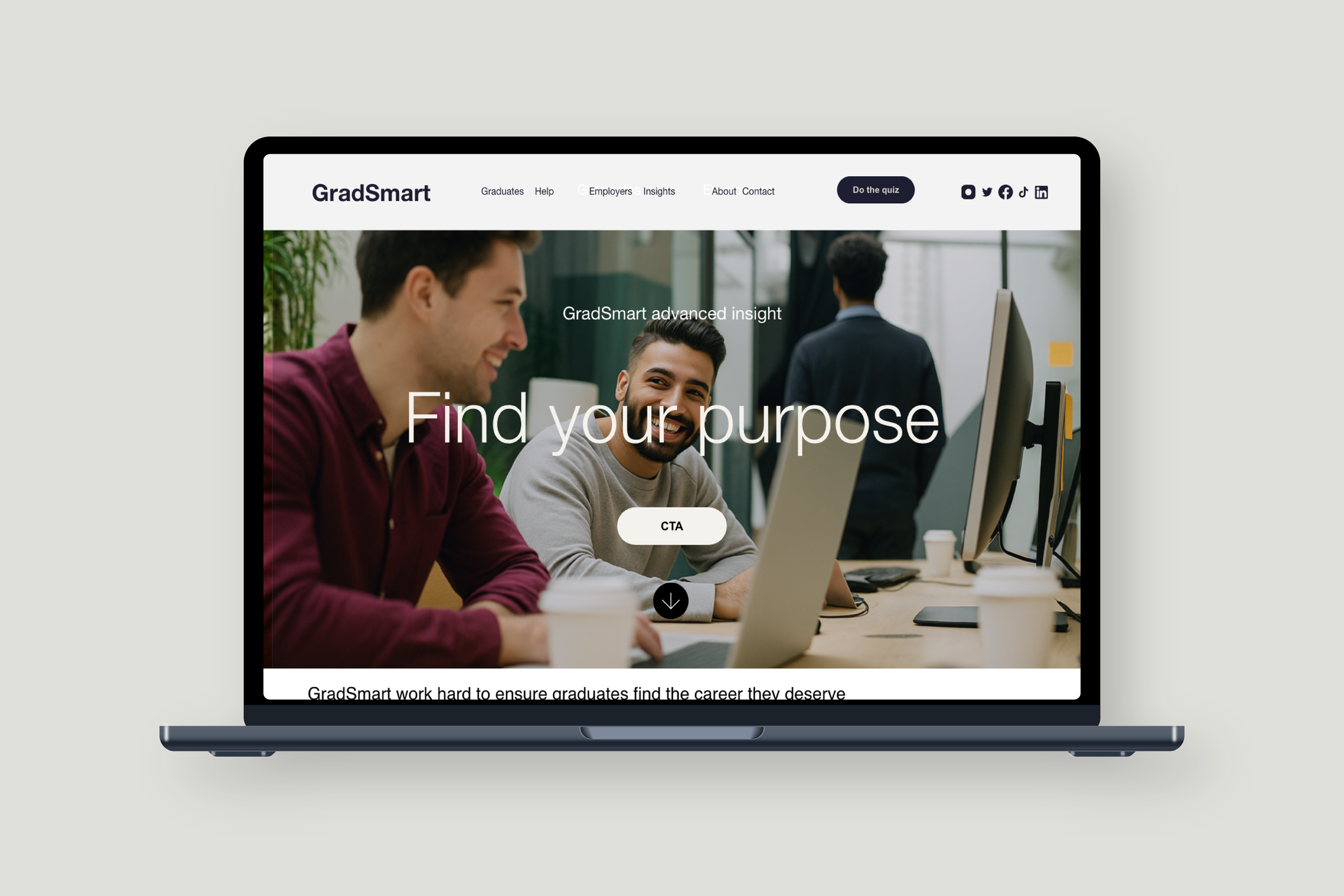
Helping graduates find purpose, and recruiters find genuine fit
The problem
Graduates apply in volume with little direction. Recruiters receive CVs that reveal little about real fit. Everyone loses time and confidence.
The insight
Better outcomes come from alignment, not urgency. Graduates need self-understanding. Recruiters need clearer insight into people.
The solution
A calm platform built around self-discovery. GradSmart’s proprietary algorithm combines aptitude testing with psychometric insight to guide better matches.
The result
Graduates apply with purpose. Recruiters place with confidence. Fewer applications. Better fit.
The problem GradSmart set out to solve
What the team at GradSmart realised early on was simple but powerful: traditional job search treats graduates like interchangeable CVs. Roles are advertised, keywords are matched, and candidates are left to apply in volume, often with little feedback and even less sense of direction. The result is confusion, wasted effort, and a growing sense that the system doesn’t really understand people.
A different starting point
Instead of asking “Which roles can this CV fit?”, GradSmart asked a better question:
What kind of work is this person genuinely suited to?
To answer it, they developed a proprietary matching algorithm that combines aptitude testing with established psychometric profiling. The aim wasn’t to categorise people, but to build a richer picture of how they think, what motivates them, and how they’re likely to perform in different working environments.
What this meant for graduates
For graduates, this shift was transformative. Rather than chasing hundreds of roles blindly, they gained insight into their own strengths, preferences, and potential, often for the first time. Job search became more focused, more purposeful, and less psychologically draining. Instead of constant rejection, candidates were guided toward roles where they were far more likely to thrive.
What this meant for recruiters
For recruiters, the benefits were just as clear. GradSmart replaced guesswork with clarity, providing a far deeper understanding of each candidate than a CV alone could offer. This meant better shortlists, stronger alignment between role and individual, and more confident, effective placements, saving time while improving outcomes on both sides of the hiring process.
The long read
Research:
Competitors and marketplace
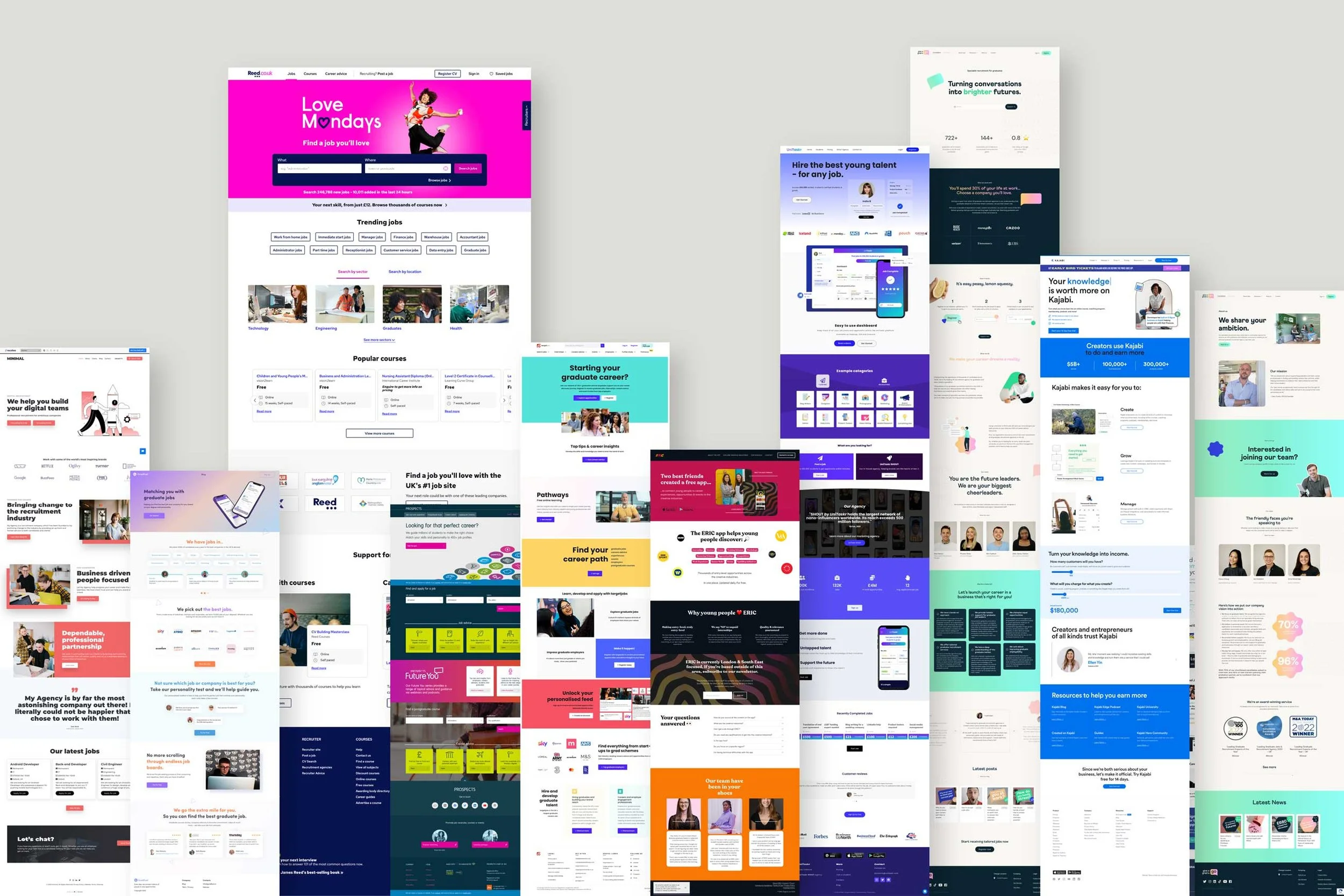
A review of competitor sites is an essential first step. Looking at direct competitors helps us understand the landscape we’re operating in, the expectations users bring with them, and the conventions that already exist. Competitors are a rich source of insight, not to copy, but to identify patterns, gaps, and opportunities for differentiation.
At the top of the market sits Reed. With a significant share and a highly polished platform, they set a clear benchmark. While often described simply as a job board, their tone of voice, structure, and guided user journeys are well considered and offer valuable lessons when designing a graduate recruitment experience.
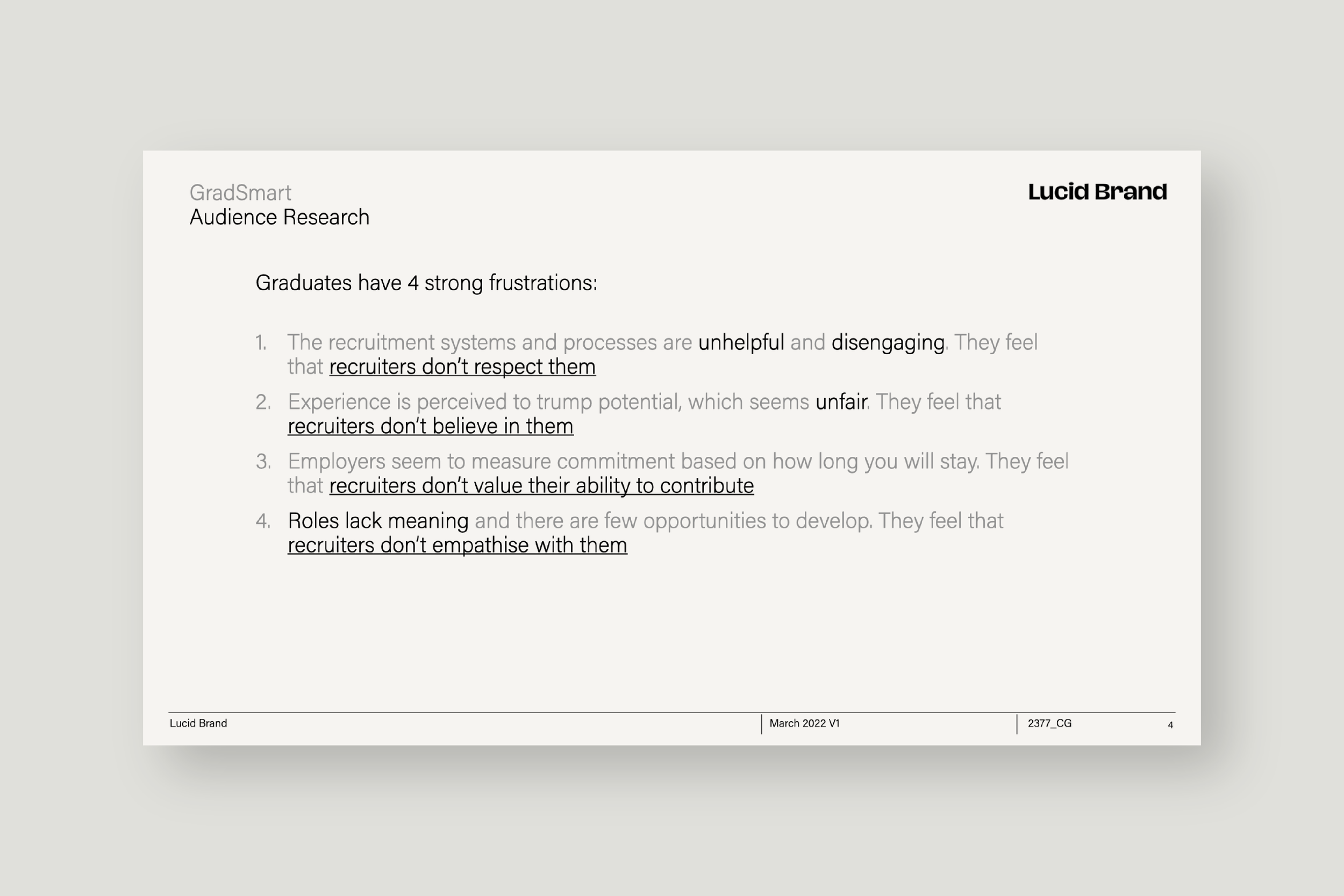
Graduates aren’t disengaged. They feel disengaged with. From systems that don’t respect them, don’t believe in their potential, don’t value contribution, and rarely offer meaning or growth.
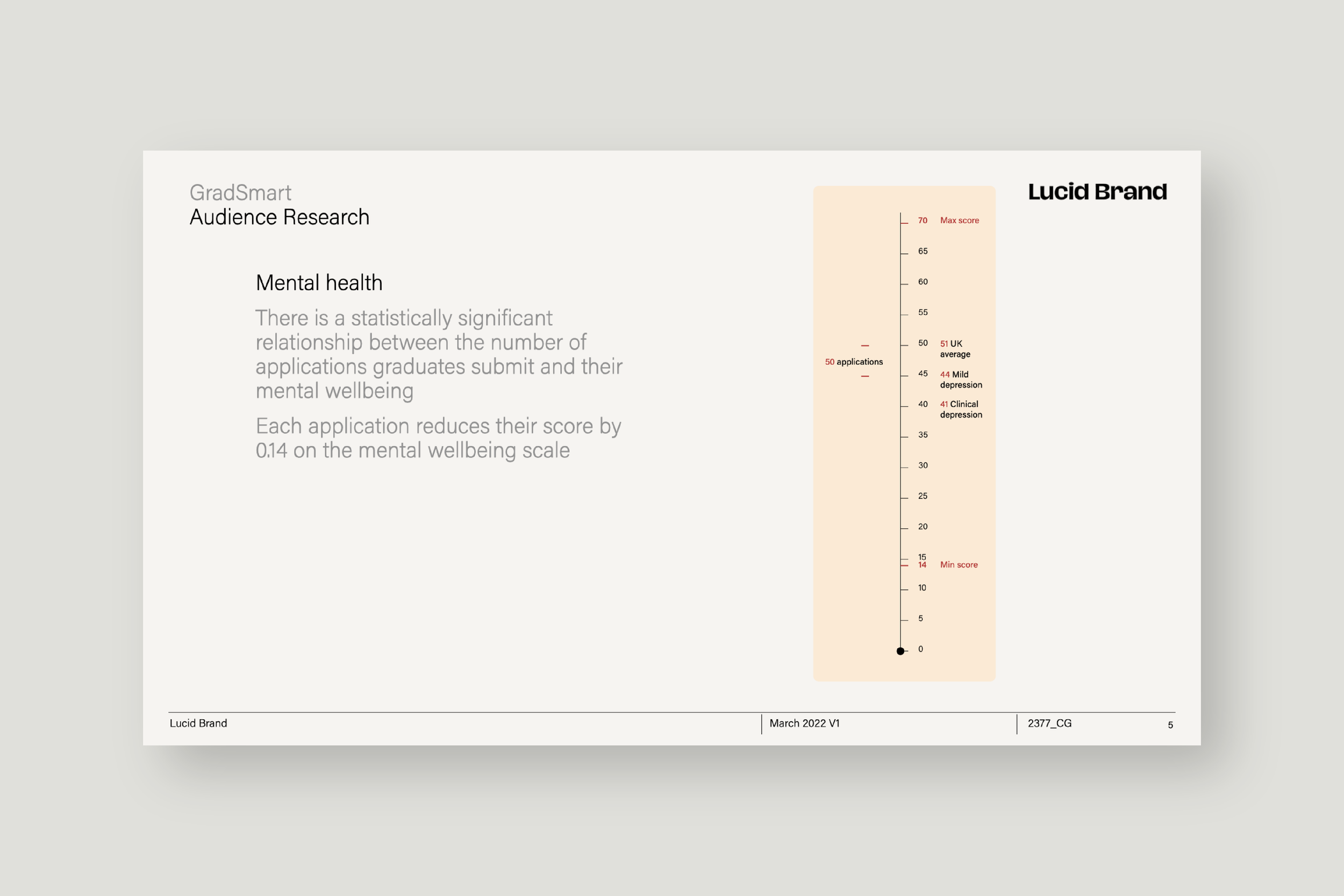
Repeated rejection has a measurable psychological cost. In our analysis, each additional low-signal job rejection was associated with an average 0.14-point decline on the Zung Self-Rating Depression Scale (SDS), highlighting the cumulative mental-health impact of high-volume, low-feedback job hunting.
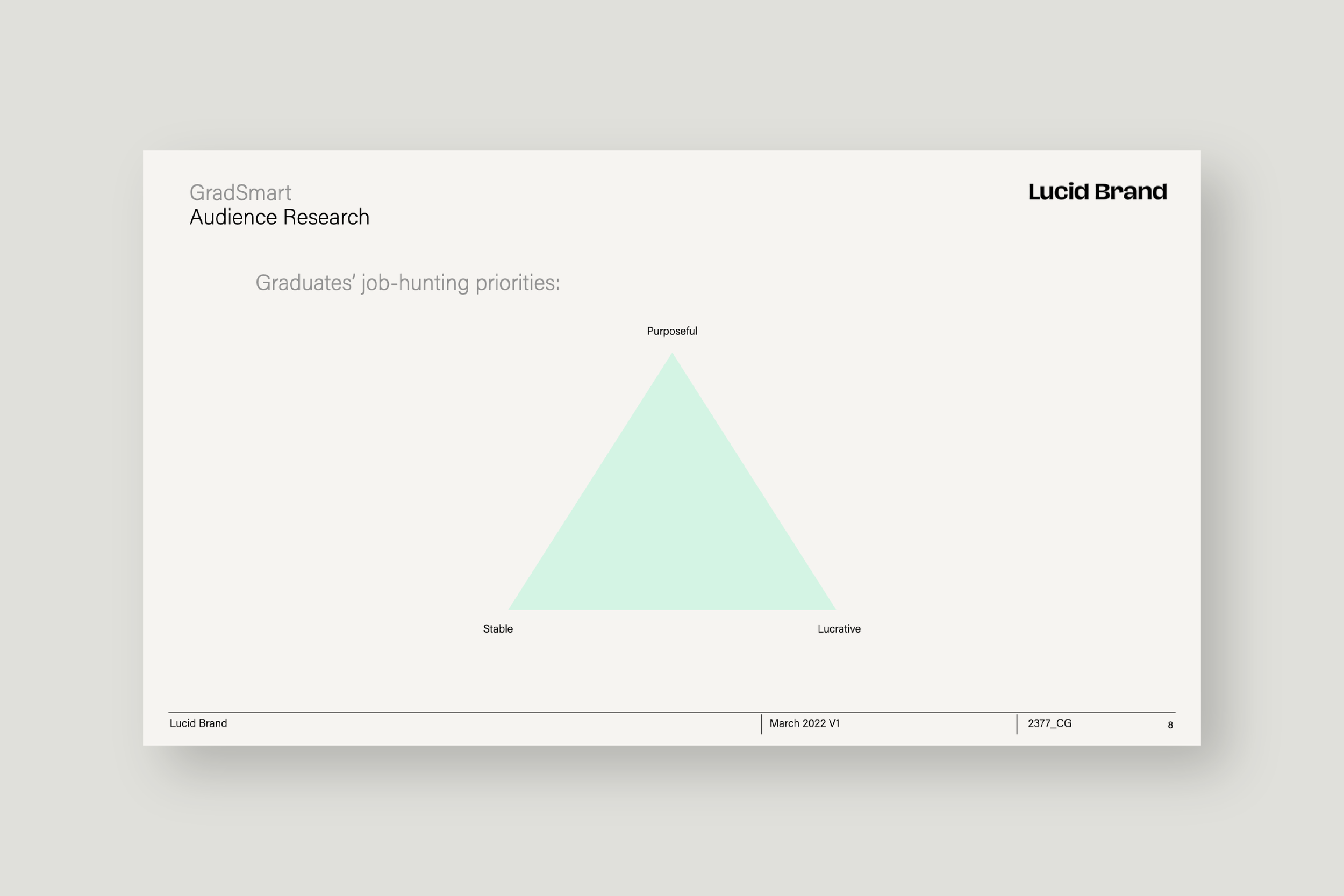
For graduates, finding a job often means compromise before they’ve even begun. Choose stability and income, and sacrifice purpose. Choose purpose, and accept uncertainty or lower pay. Roles offering all three are rare, and rarely visible.
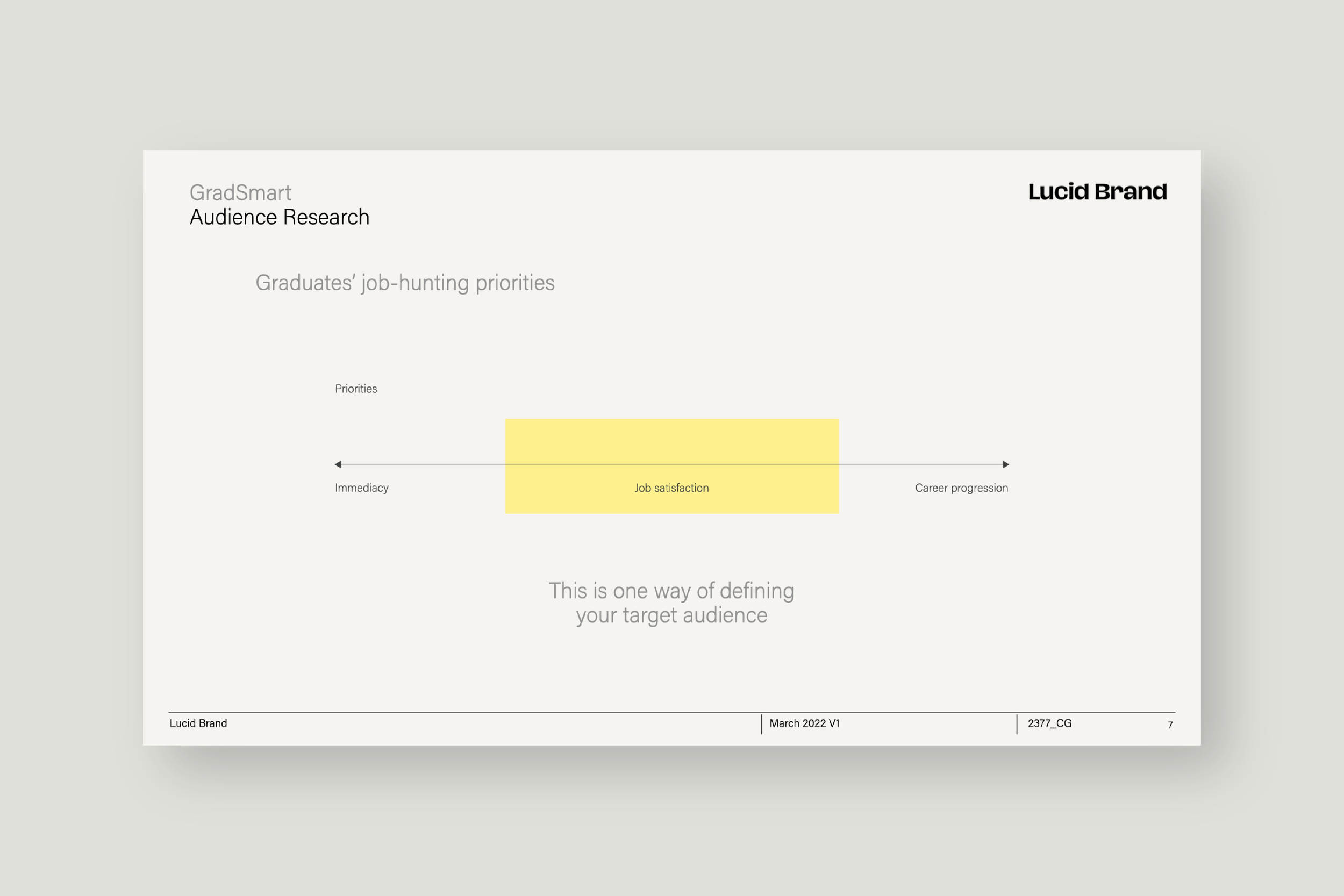
Around 80% of students leave university unsure of what they want to do next. Of these, 25% will take any available job, 25% already have something lined up, leaving 50% actively seeking work that feels genuinely satisfying.
Graduate research
The problem
Most graduate job hunting is built on volume rather than fit. Unclear direction, generic applications, and impersonal recruitment systems push graduates into guesswork, repeated rejection, and growing self-doubt. This isn’t a lack of ambition, it’s a lack of clarity. When purpose is undefined, job searching becomes exhausting, inefficient, and emotionally draining.
The solution
GradSmart changes the starting point. By helping graduates understand what genuinely motivates them, their interests, strengths, and aspirations, it replaces searching with intelligent matching. Fewer applications, stronger alignment, and clearer direction lead to less rejection, greater confidence, and work that feels meaningful from the outset.
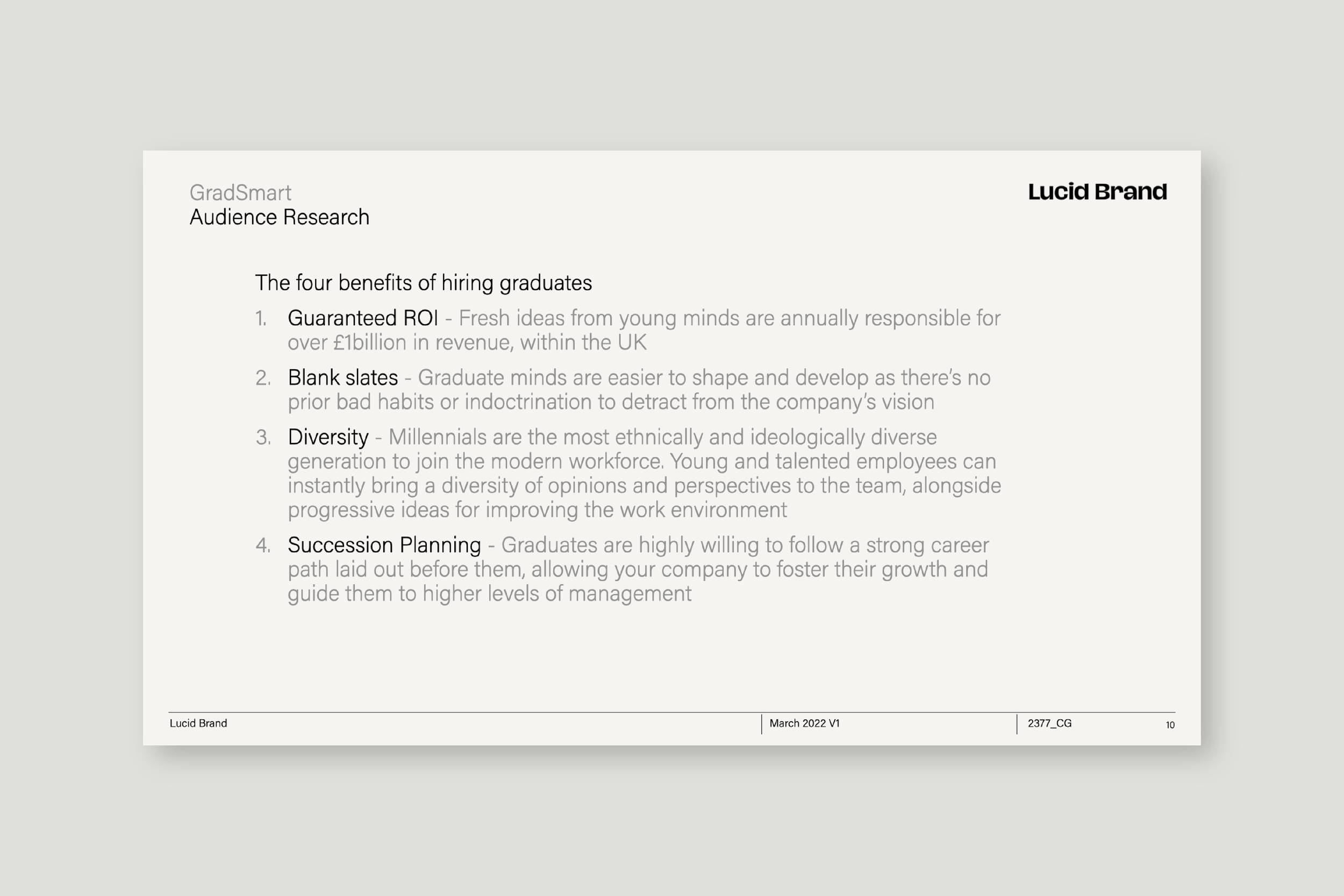
Graduates offer long-term value: fresh thinking, adaptability, diversity, and clear succession pathways that deliver measurable return on investment.
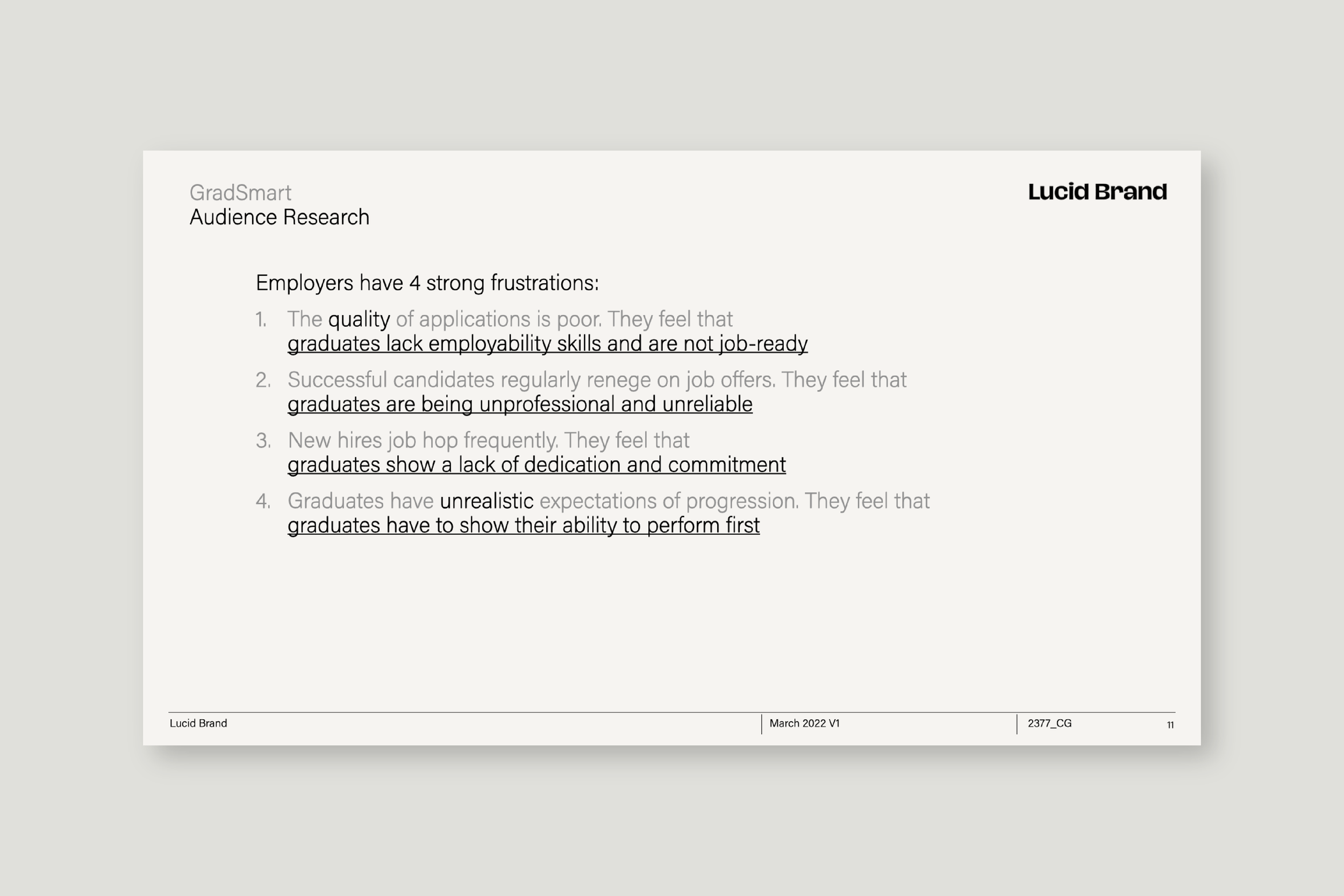
Employers struggle with graduate readiness, reliability, retention, and expectations, creating frustration on both sides of the recruitment process.
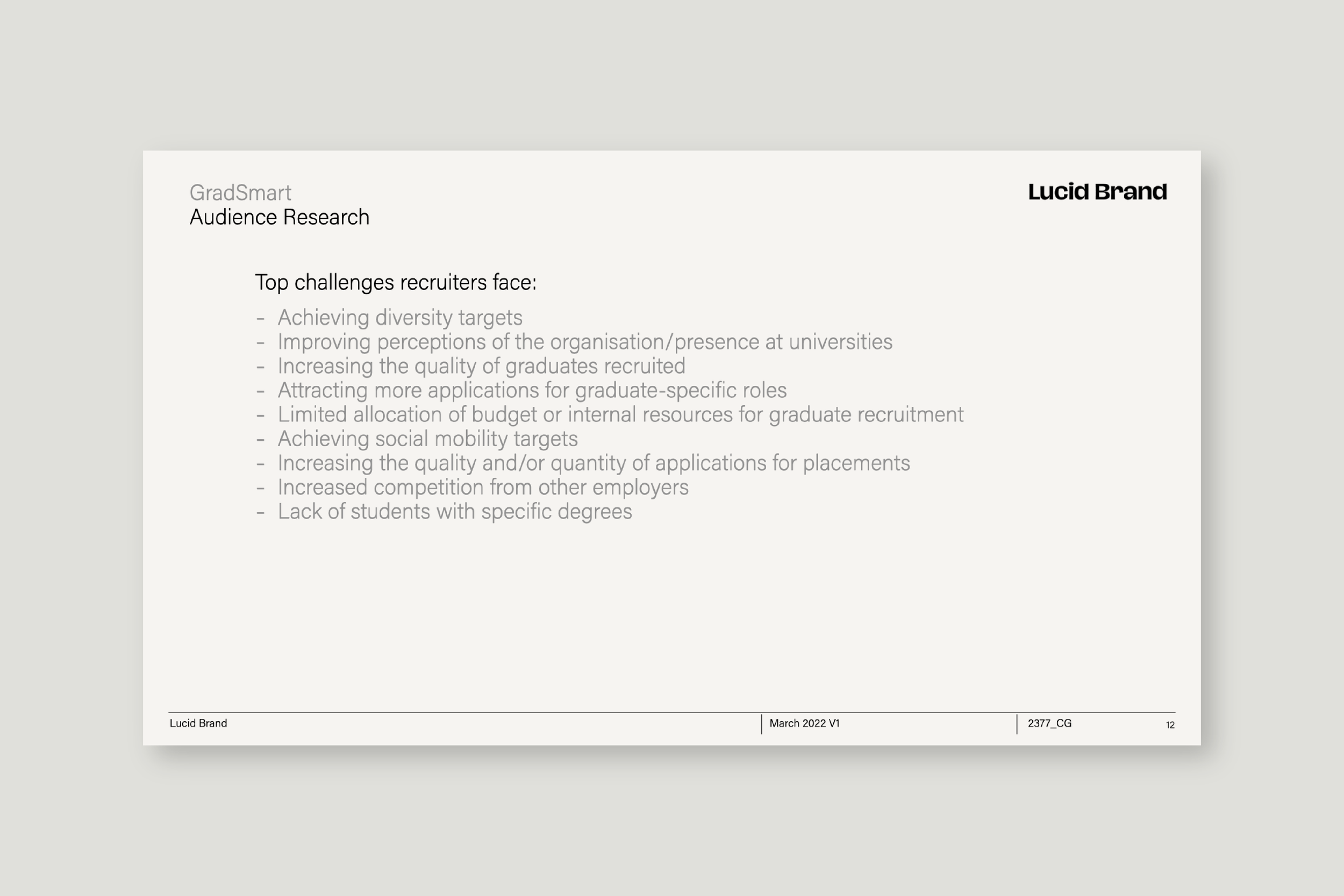
Graduate recruitment is constrained by competition, limited resources, diversity goals, and the ongoing challenge of attracting high-quality applicants.
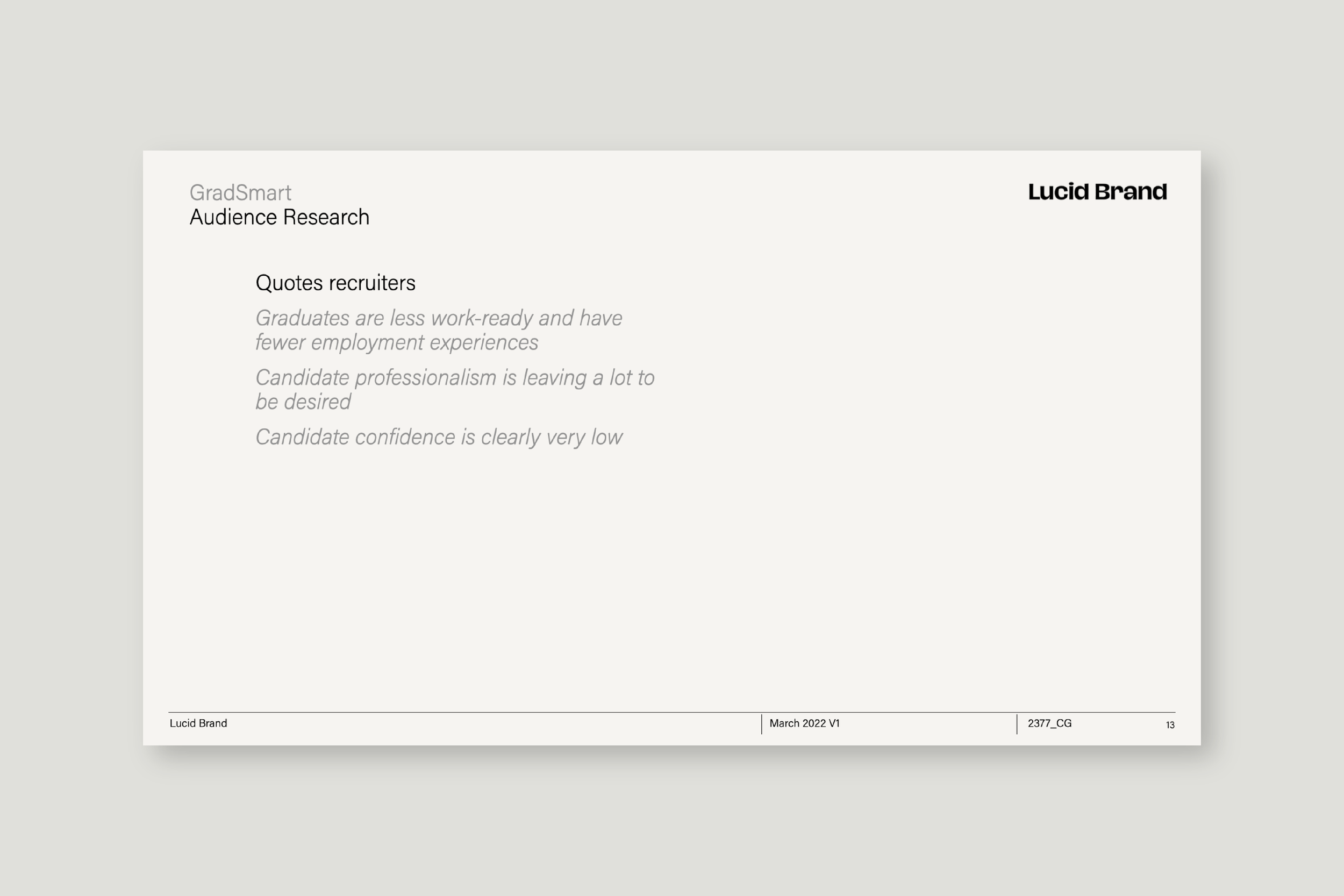
Recruiters consistently report declining readiness, professionalism, and confidence among graduates entering the recruitment process.
Recruitment research
The problem
Graduate recruitment isn’t failing because graduates lack potential, or because employers lack intent.
It’s failing because both sides are operating with too little clarity, too late in the process.
Employers see poor applications, wavering commitment, and unrealistic expectations. Graduates experience opaque systems, mixed signals, and pressure to perform before they understand where they fit. Add limited budgets, rising competition, diversity targets, and declining confidence, and recruitment becomes transactional, defensive, and frustrating for everyone involved.
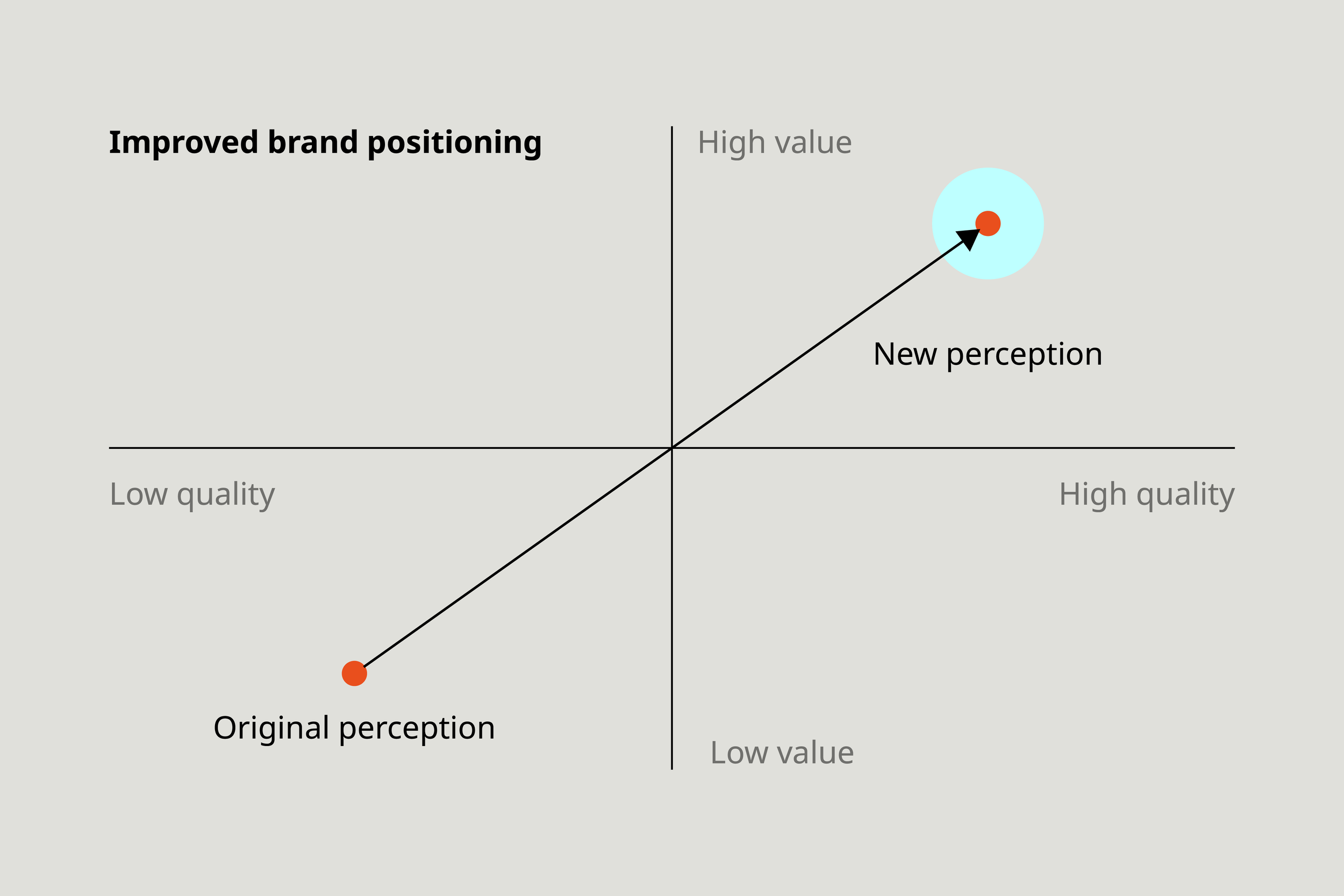
The result is misalignment: good graduates overlooked, good employers misunderstood, and roles filled without long-term fit.
The solution
GradSmart fixes the problem upstream, before applications, interviews, or offers.
Instead of asking graduates to perform readiness, GradSmart helps them build it: clarifying values, motivations, strengths, and contribution, so applications improve, confidence rises, and expectations become realistic.
At the same time, employers gain access to candidates who are more self-aware, better aligned, and genuinely invested, reducing drop-outs, early churn, and wasted effort.
GradSmart replaces guesswork with alignment, and short-term hiring with long-term fit, restoring confidence on both sides of the recruitment process
This research delivered:
Purpose
Why it exists.
To restore clarity, confidence, and direction to graduate recruitment helping graduates find meaningful work and employers hire for long-term fit, not short-term need.
Differentiation
Why it’s meaningfully different.
GradSmart starts with self-understanding, not applications.
While most graduate platforms optimise for volume, speed, and keyword matching, GradSmart is built around insight, alignment, and human potential. It addresses the root cause of poor outcomes — lack of clarity on both sides — rather than treating symptoms like low application numbers or weak CVs.
Positioning
Where it lives in the market.
A calm, insight-led recruitment platform that connects graduates and employers through purpose, potential, and long-term fit.
Not a job board.
Not an assessment tool.
Not a funnel for volume hiring.
GradSmart sits between education and employment, helping both sides make better decisions earlier — with less noise and more confidence.
Proposition
What it delivers.
GradSmart replaces guesswork with alignment.
For graduates, it provides clarity on who they are and where they can thrive.
For employers, it delivers fewer, better-matched candidates who are more engaged, realistic, and likely to stay.
The outcome is improved readiness, stronger commitment, and better long-term hires — without increasing complexity or cost.
Messaging hierarchy.
Content with purpose
The GradSmart experience is carefully designed to engage a specific audience and clearly differentiate it from conventional recruitment platforms. Content feels relevant, calm, and human, avoiding generic recruitment language in favour of clarity and understanding.
This delivers immediate relevance and reassurance — helping visitors quickly feel they’re in the right place.
Headlines that answer real needs
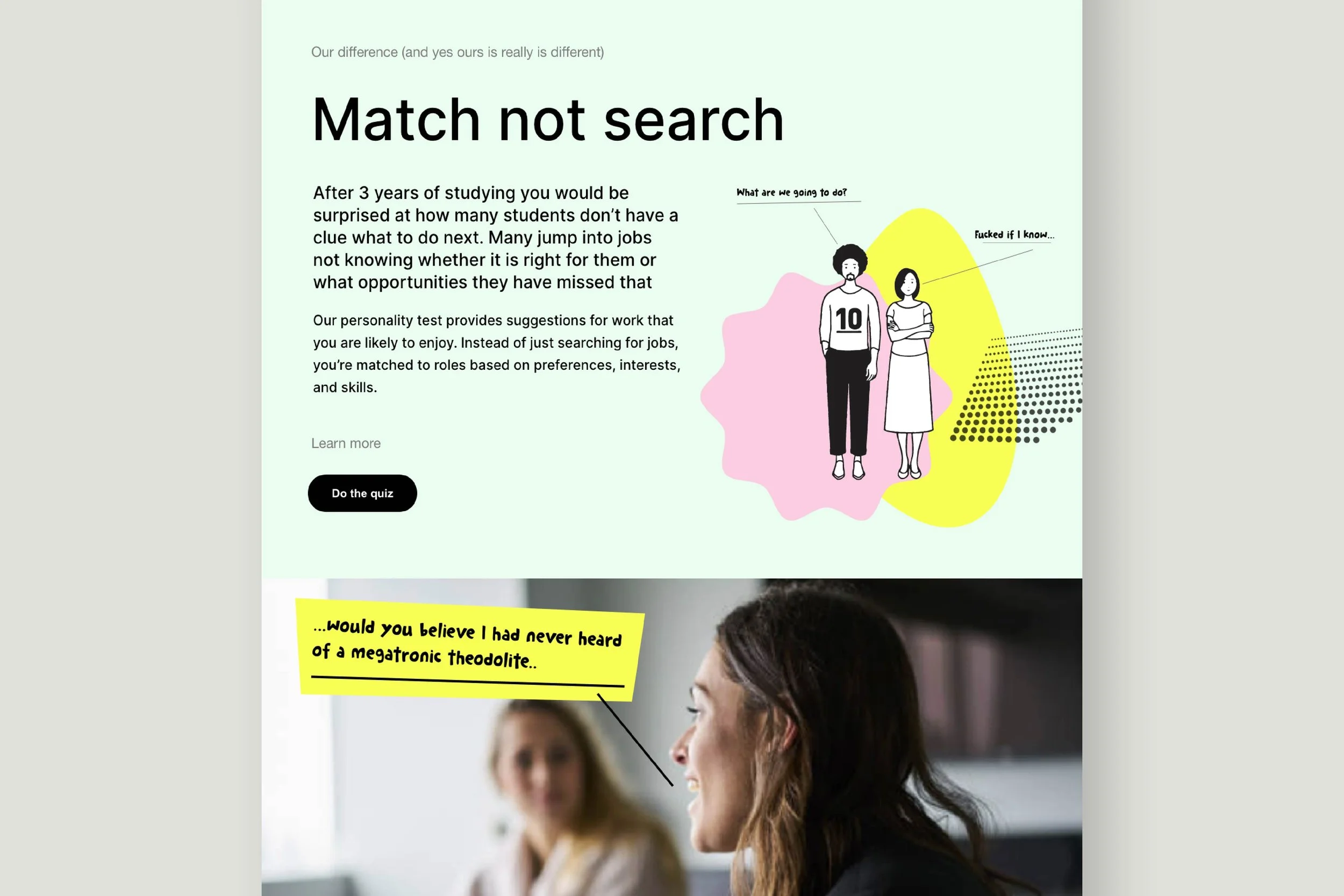
Rather than leading with claims, GradSmart uses meaningful headlines to reflect the questions graduates are already asking. Phrases such as What does a good job look like? and Match not search encourage reflection before action, helping users orient themselves and make sense of their choices.
This delivers confidence and direction, reducing guesswork and early anxiety.
A visual language that supports clarity
Illustrations, photography, and simple flow-based layouts make complex ideas easier to grasp. A warm, expressive colour palette adds character while remaining restrained, lifting the experience away from corporate norms without distraction.
This delivers flow, approachability, and trust, supporting understanding rather than competing with it.
Value propositions
Value propositions capture what truly matters
Value propositions explain why someone should care, what they can expect, and whether something feels relevant to them. By cutting through noise and complexity, they bring clarity, focus communication, and create confidence; guiding decisions before persuasion is ever needed.
Graduate proposition:

Understand what motivates you, where you fit, and what meaningful work looks like.
Be matched to roles based on alignment and contribution, not guesswork.
Recruiter proposition
We create less noise, higher relevance, and better use of time and budget.

Candidates who are clearer, more committed, and more likely to stay.
Website design
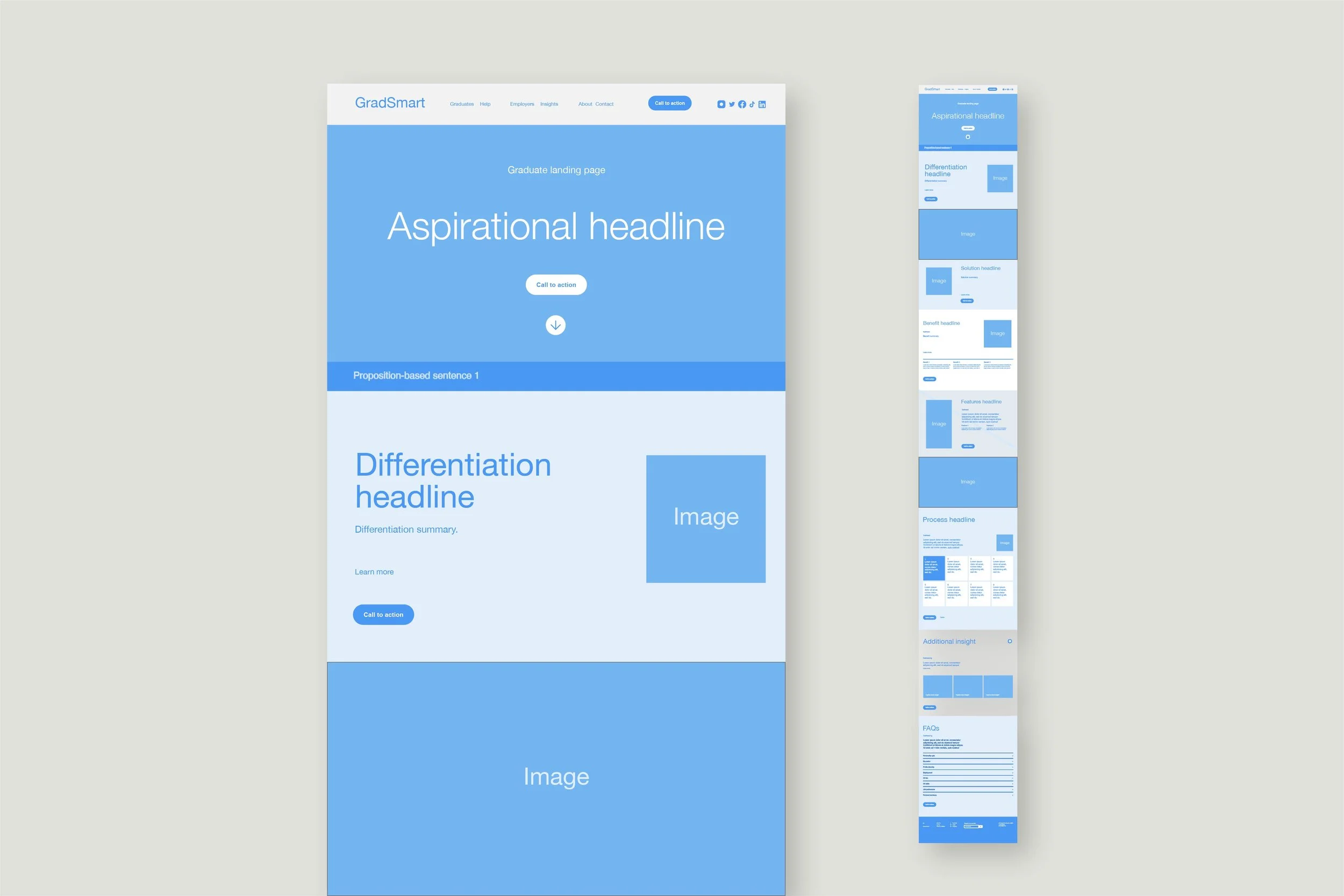
Wireframes
With the content structure agreed, the next step is to translate this thinking into wireframes. Wireframes allow layout, hierarchy, and flow to be resolved quickly, before time is spent creating content. Because content creation is often the most time-consuming and costly part of a project, establishing the structure early helps reduce unnecessary effort and keeps development efficient.
Working at this level also makes it easy to adjust the order, emphasis, and flow of sections without distraction. Once the structure is clear, assets and copy can be created with intent, designed specifically to support each section’s purpose. By focusing on structure before visual design, the experience can be refined, simplified, and aligned, creating a solid foundation for a calm, intuitive interface.
Website content
Information hierachy
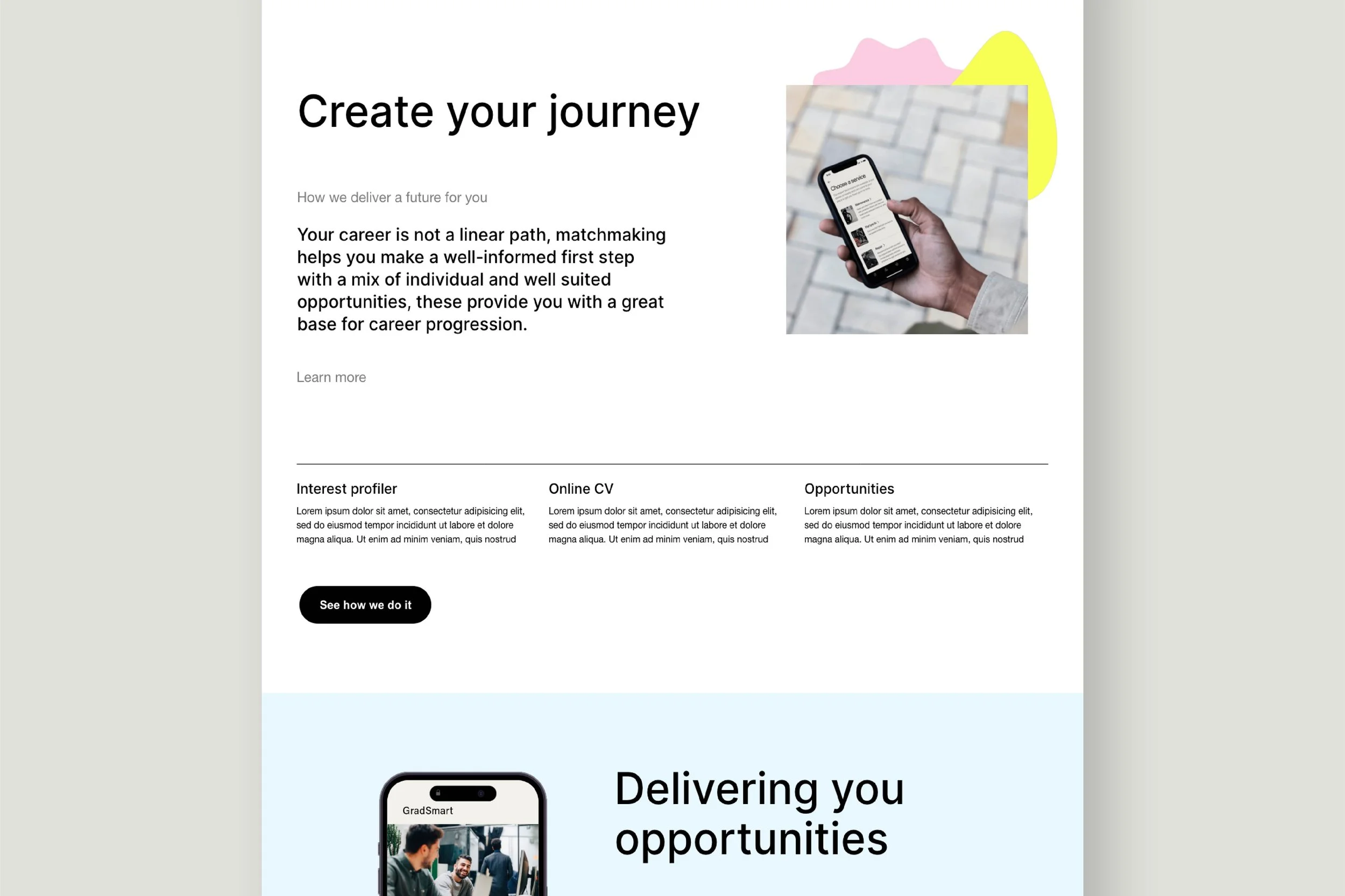
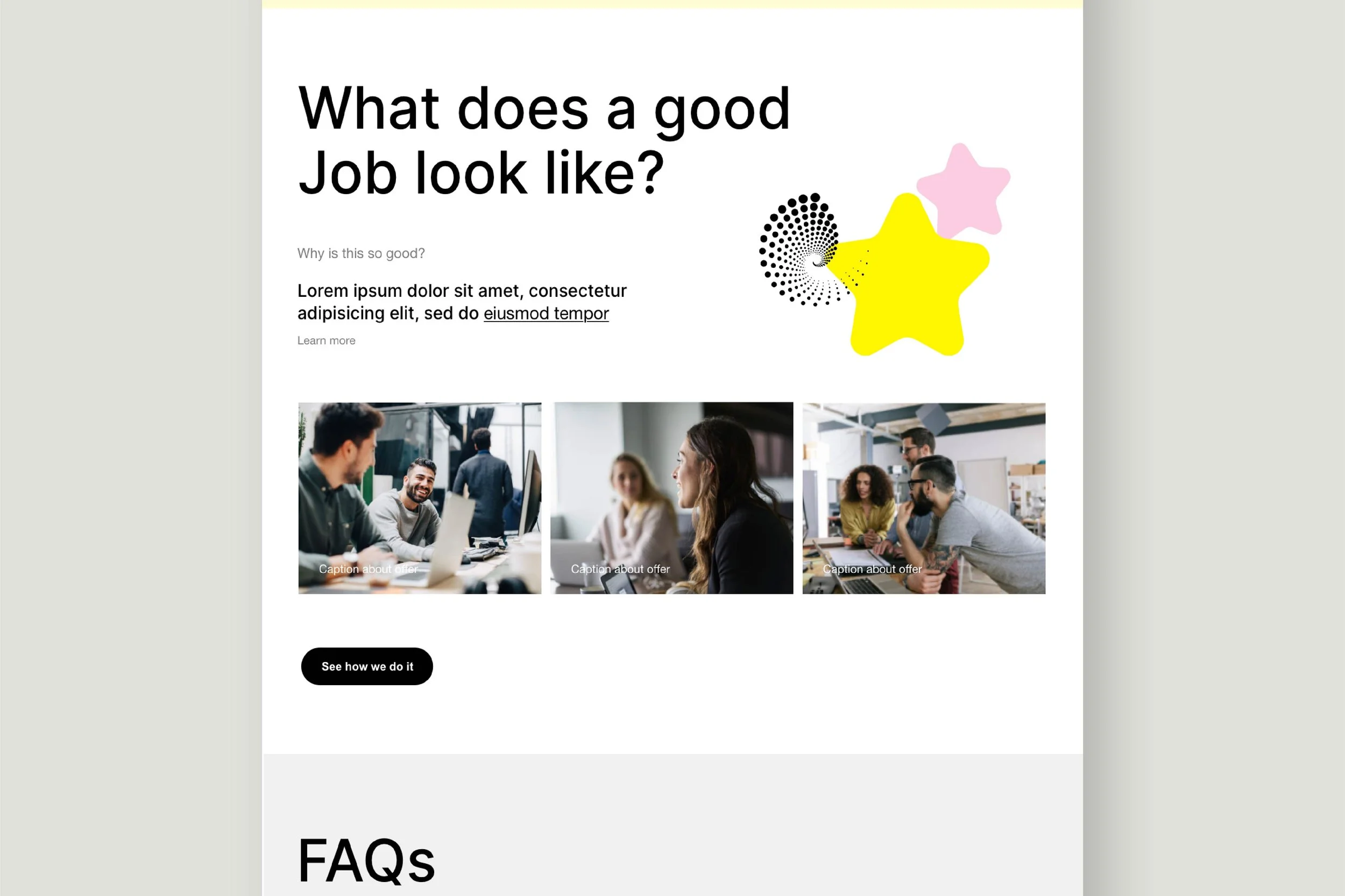
Designed for a specific audience
This content is carefully designed to engage a very specific audience and clearly differentiate GradSmart from conventional recruitment platforms. Rather than relying on generic messaging, it speaks directly to the real questions and uncertainties graduates experience when thinking about work.
Meaningful headlines, not generic claims
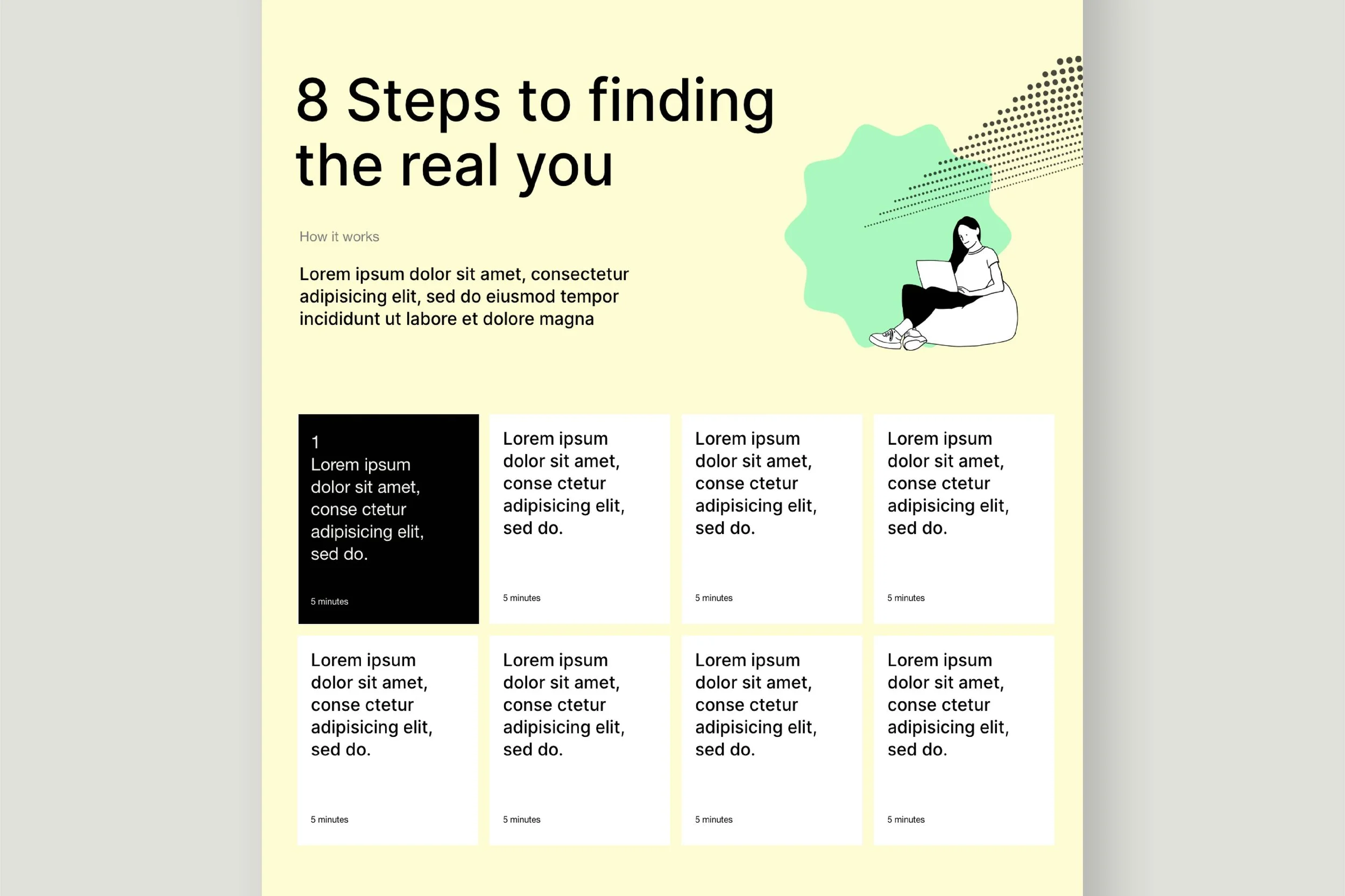
The experience is shaped around meaningful headlines, each one answering a specific need at that moment. Headlines such as What does a good job look like?, Match not search, and 8 steps to finding the real you”invite reflection before action, helping users pause, consider, and feel understood.
A more human visual language
Illustrations, photography, and simple flow-based layouts help ideas land intuitively, while a warm, expressive colour palette adds character without distraction. Together, these elements create a thoughtful, human experience that feels distinct from the corporate recruitment norm.
Final concept
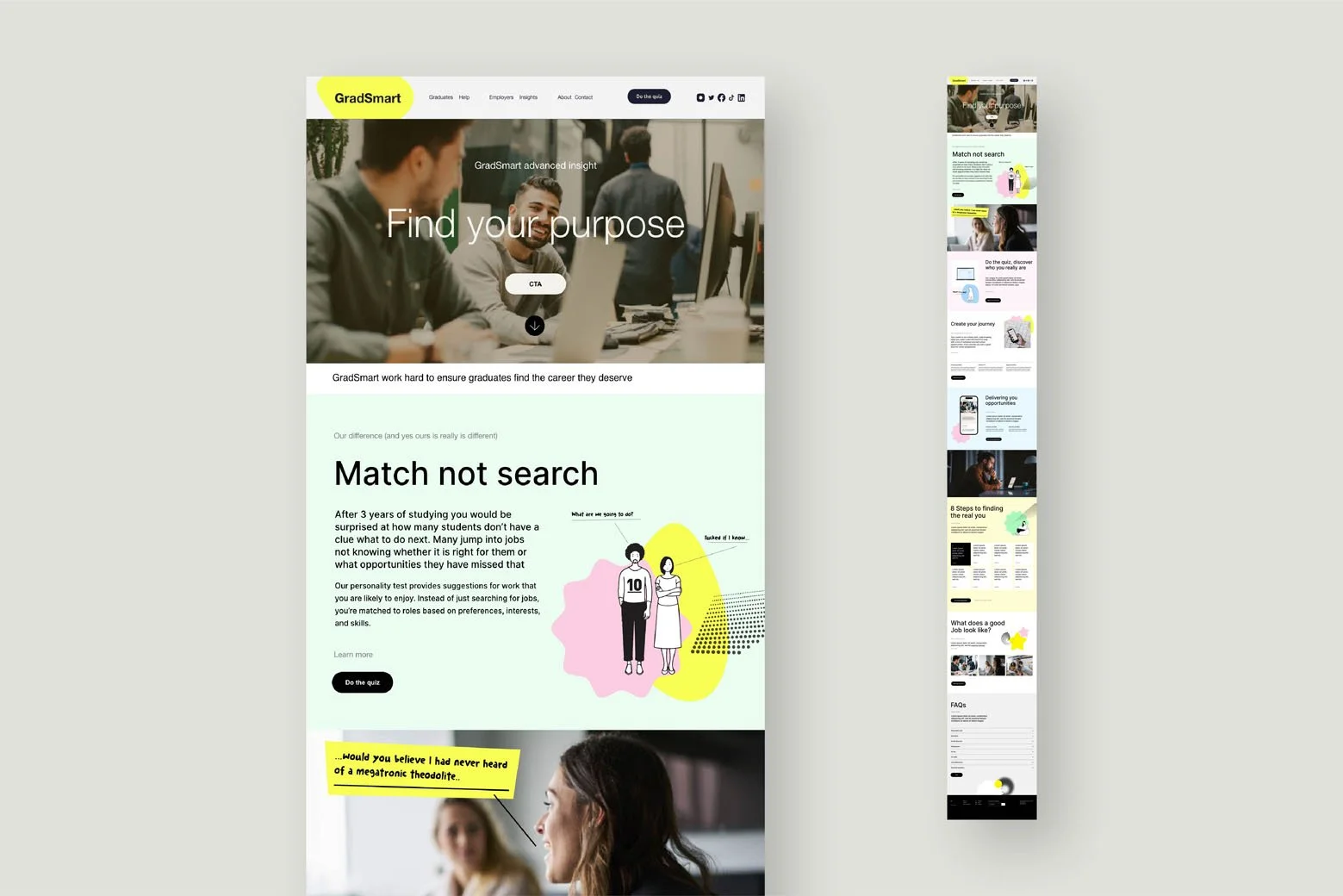
The completed concept
The final design brings the strategy, structure, and content together into a single, coherent experience. Shown here as both a focused detail and the full page in context, it demonstrates how clarity, hierarchy, and tone work in practice.
Each section flows naturally into the next, guiding graduates and recruiters from first impression through to understanding and confidence. Visual restraint, considered spacing, and a warm, human palette reinforce the message without distraction. The result is a design that feels calm, purposeful, and easy to navigate, reflecting the intent of GradSmart and supporting better decisions at every stage.
Handover
Documentation
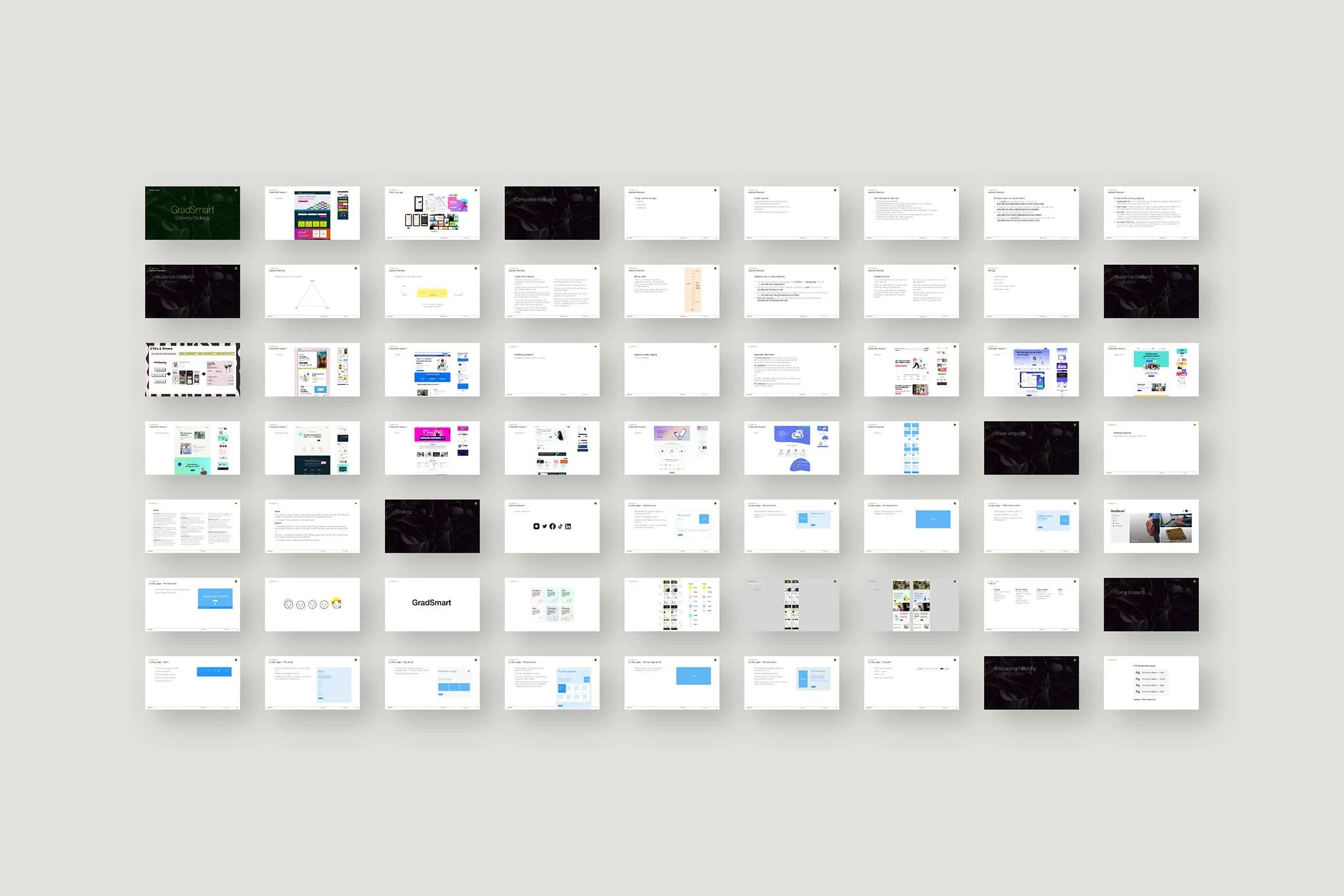
Finally, everything was brought together and delivered as a comprehensive document, clearly setting out the strategy, structure, messaging, and design intent. All assets created for the website were also organised and supplied as ready-to-use files to support the build. While the client ultimately chose to take development in-house, the work provided a complete, considered blueprint — ensuring the thinking, content, and design direction were fully defined, regardless of how the site was implemented.