NHS
National Patient Safety agency
The CleanYourHands campaign
Improving and saving lives through behaviour change
The problem?
Hospital-acquired infections were costing lives and money, and hand hygiene compliance was inconsistent, despite clear clinical guidance.
The insight?
People don’t change behaviour because they’re told to. They change when the right action is easy, visible, and positively reinforced.
The solution?
A long-term internal communications campaign embedded directly into hospital life. simple messages, renewed monthly, supported by a consistent visual system.
The outcome?
100% hospital uptake, national behaviour change, over 150 lives saved* in year one, £145m in annual savings, and a campaign replicated globally.
* Saving lives is extraordinary, but even more extraordinary is the huge number of people saved from cross infection and longer stays in hospital, sometimes with additional complications.
I was invited to the National Patient Safety Agency for a meeting with an infection control nurse named Julie Storr. Julie had written a thesis on infection control inspired by the work of Swiss physician Didier Pittet, based in Geneva.
Pittet had transformed infection control by focusing on something deceptively simple: making hand hygiene easy, visible, and unavoidable. The results in Geneva were compelling, and Julie brought this thinking to the NPSA.
The decision was made to run a pilot across the NHS. The National Health Service supplied alcohol hand rub; our role was to create the internal communications campaign that would change behaviour at scale.
Strategy
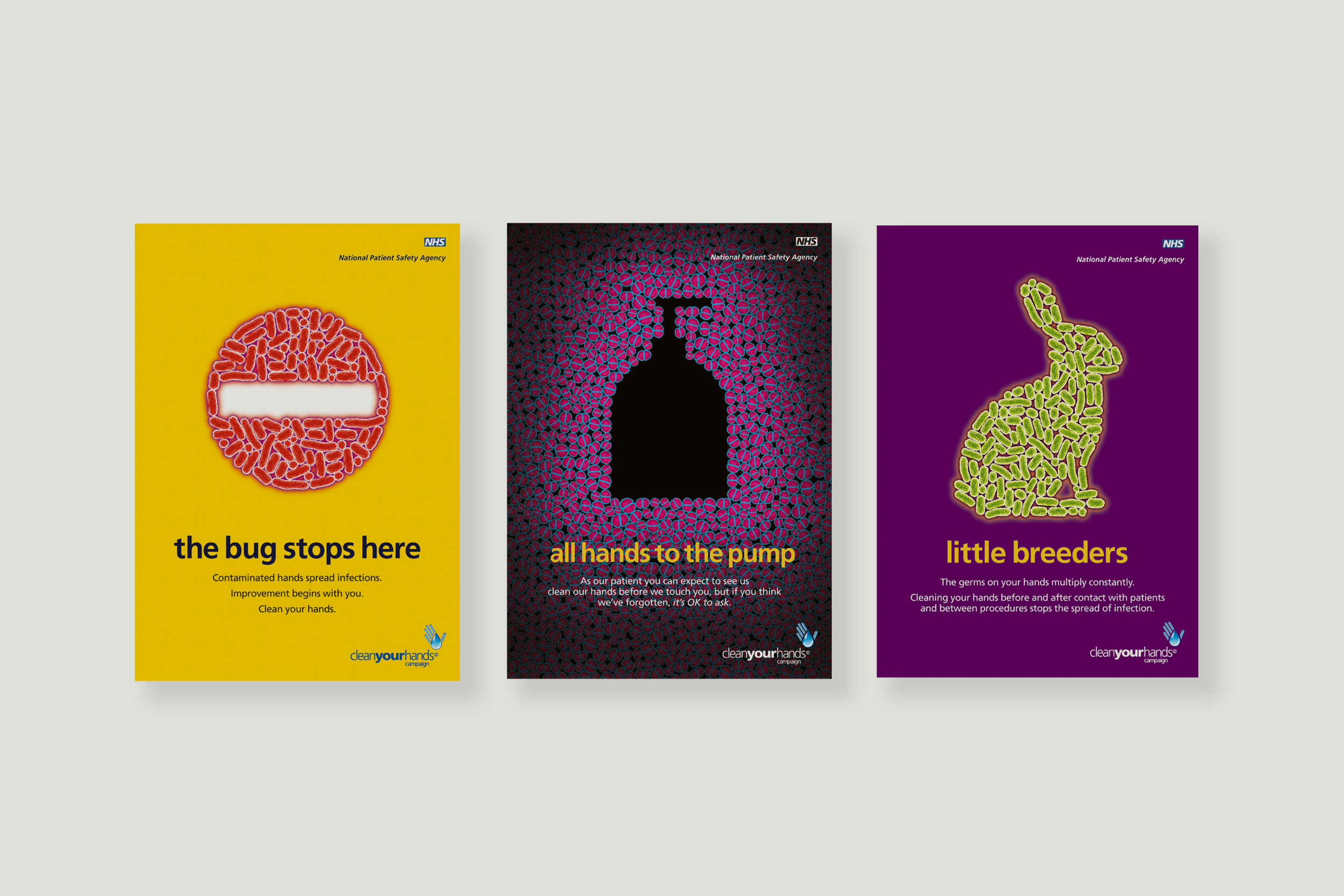
You can't tell people what to do, you have to bring them along with you. So the posters who created with a touch of humour, the bright colours warmed up the wards.
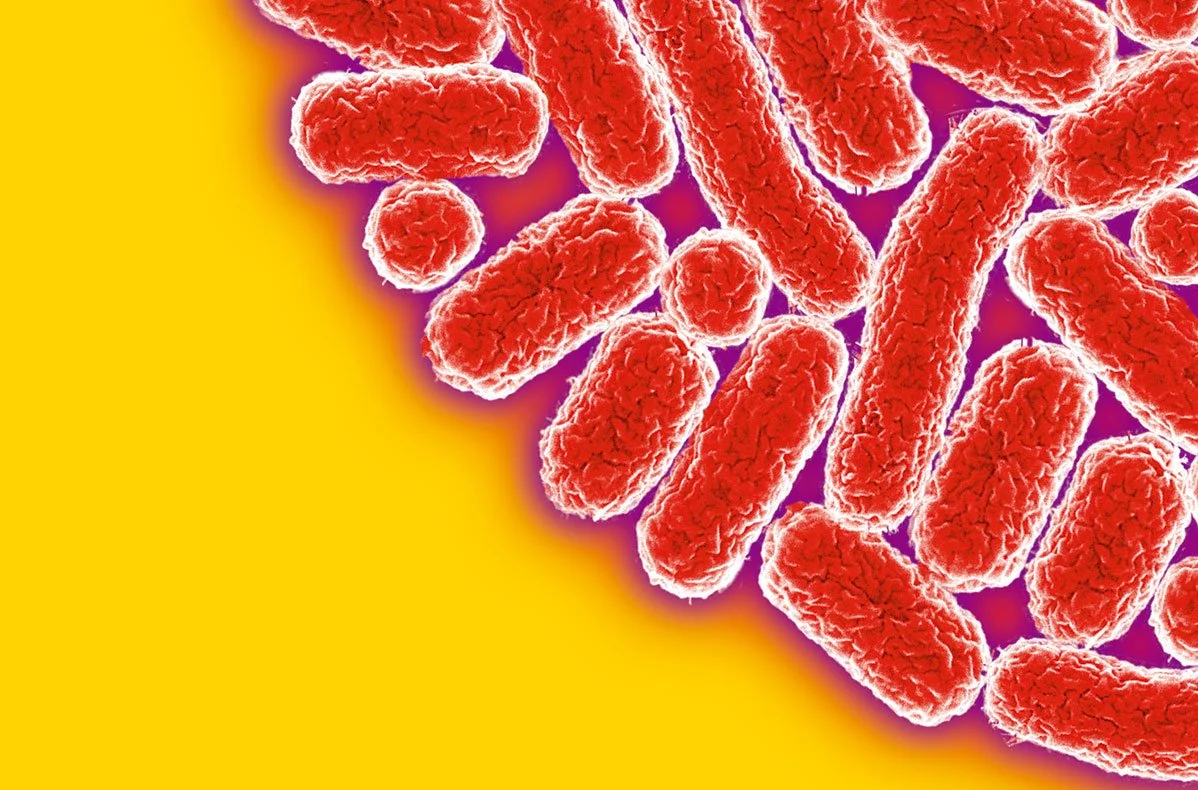
The strategy focused on changing behaviour by making the right action feel normal, visible, and socially supported. Alcohol rubs were distributed at key points around the wards and made impossible to miss, clearly and placed exactly where decisions were made. Posters used warmth and gentle humour to lower resistance, while bright colours helped lift and humanise clinical environments.
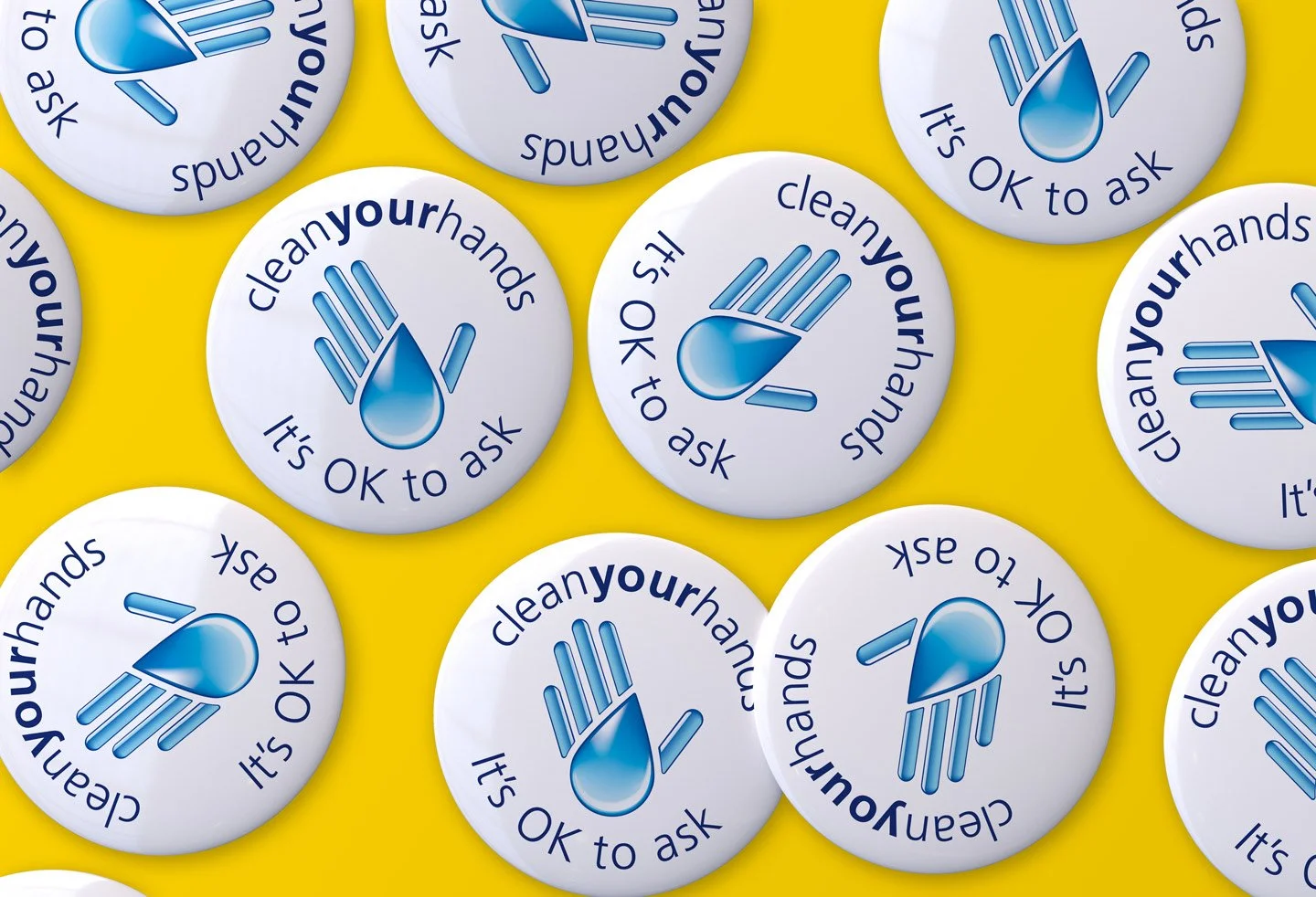
Champions were enrolled to model behaviour from within, while patients were given explicit permission to speak up, reinforced through simple messages like “It’s okay to ask” and hundreds of thousands of badges worn across wards. Clear documentation and signage removed ambiguity, showing precisely what good practice looked like in real terms.
The pilot was a success, and it was rolled out across England and Wales.
Over five years, it became one of the largest internal communications programmes ever undertaken by the NHS.
More than 18,000 hospital wards displayed new posters every month.100% of hospitals signed up (participation was voluntary).
The campaign focused on positive reinforcement, clarity, and relentless visibility. It worked.
Pilot results
99% said they had seen the posters
84% said the posters made them think about hand hygiene
60% said the posters improved discussion among staff
In its first year alone, CleanYourHands was estimated to have saved over 150 lives, significantly reduced the risk of secondary infection, and cut annual costs by around £145 million.
The campaign went on to win the Design Business Association Grand Prix and two Chartered Institute of Public Relations awards. Its approach has since been replicated around the world.
Year two delivered even stronger results.
Julie, whose passion helped initiate the programme, went on to become Assistant Director of Infection Protection at the NPSA, President of the Infection Prevention Society, and a consultant to the World Health Organisation.
Clean Your Hands – Phase Two
From national success to a public showcase.
Cleanyourhands II
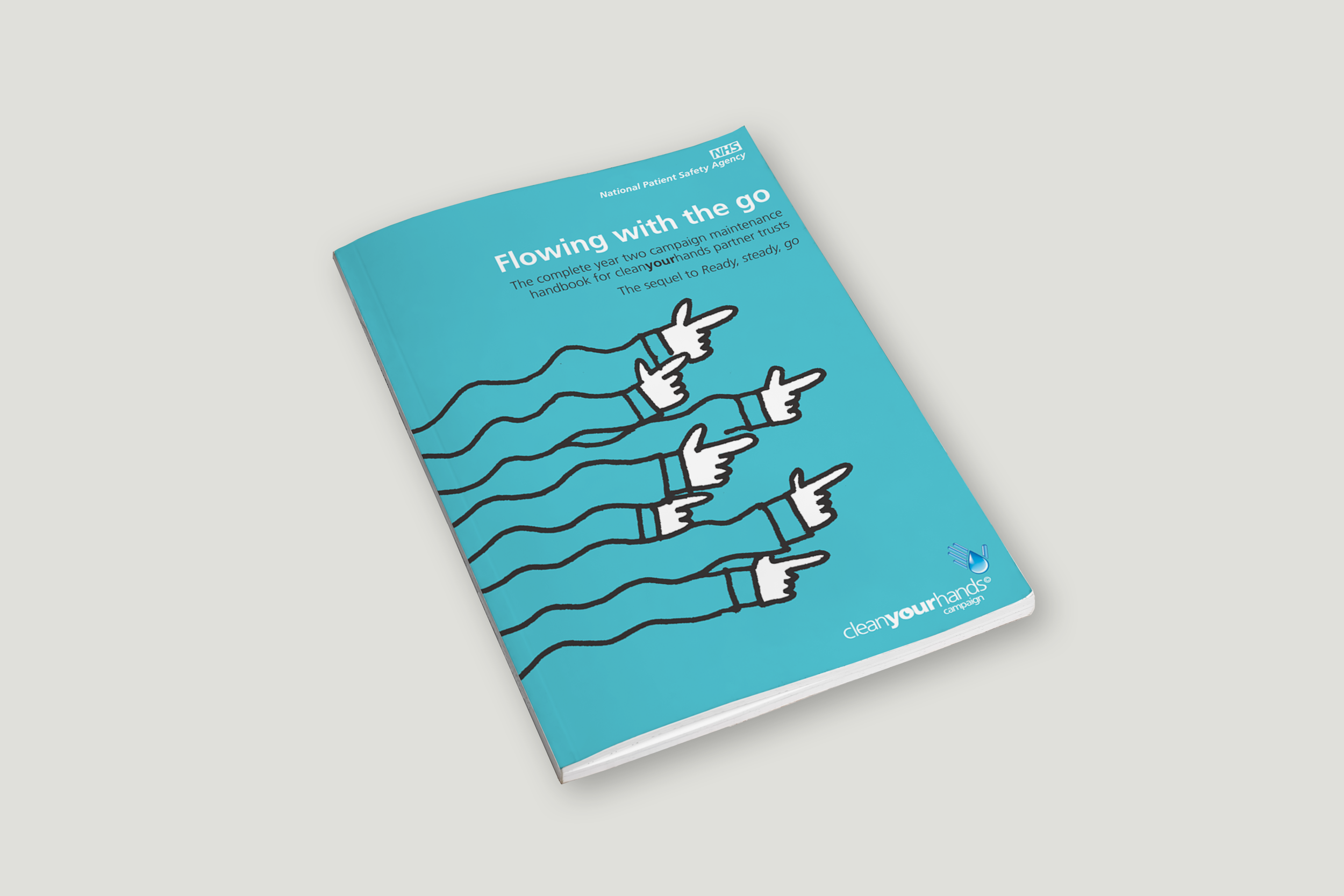
Following the success of the Cleanyourhands first year’s internal campaign, the National Patient Safety Agency took their success public.
At a national conference at Birmingham’s NEC, they launched an exhibition in the main atrium, showcasing the Agency’s broader remit and celebrating the campaign’s results.
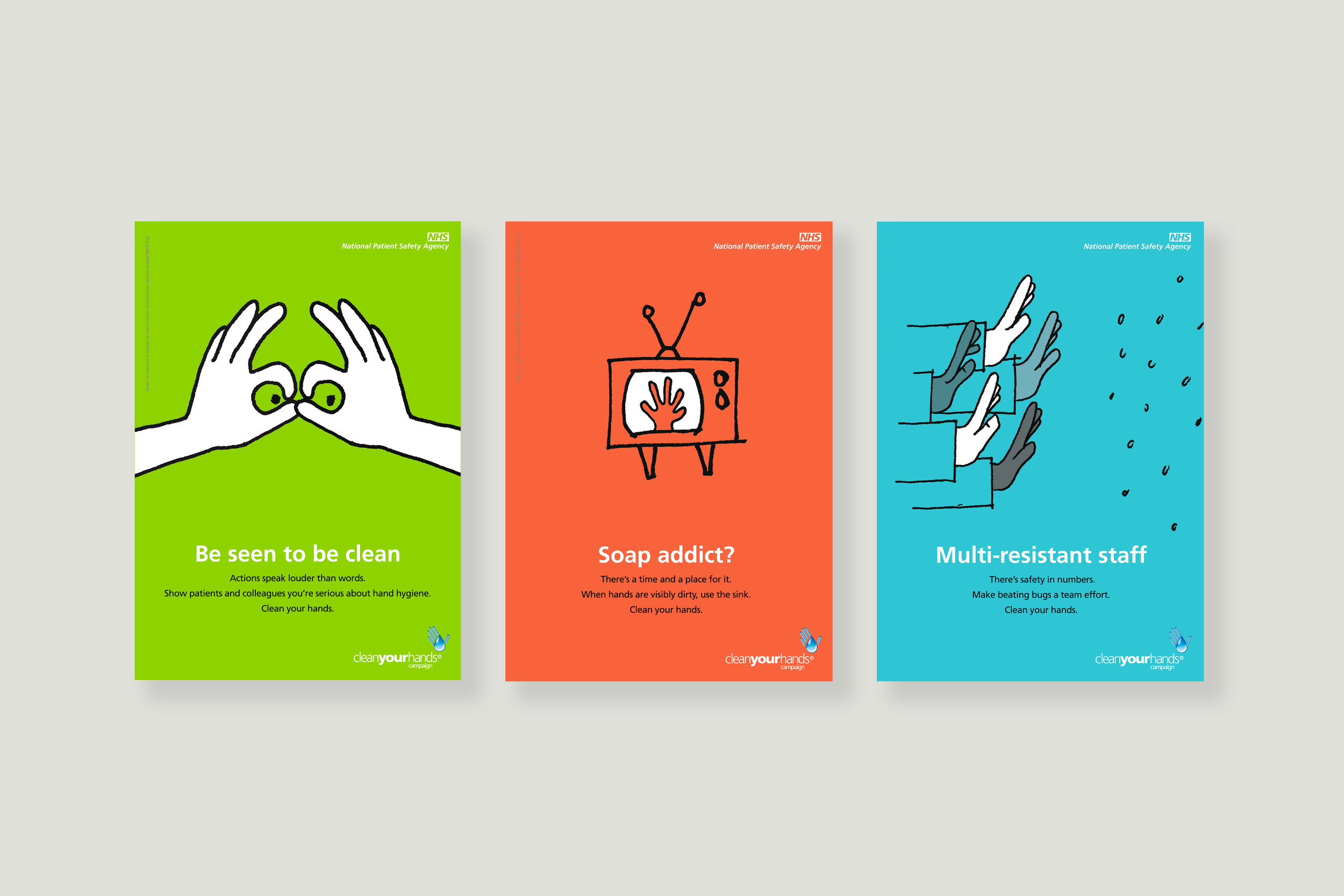
As part of the build-up, a national poster competition was held to engage NHS staff in designing the next round of materials. Twelve winners were chosen, and our job was to turn those winning ideas into a coherent, national-ready set.
To unify the range, we developed a warm, simple illustration style with a touch of humour, one that could adapt to the different ideas while keeping the core message clear. Each poster credited its original designer by name.
The result was a lively, human-centred campaign that encouraged real ownership, and spread the message far beyond the pilot wards where it all began.
Medical Error
Turning a taboo into a teachable moment.
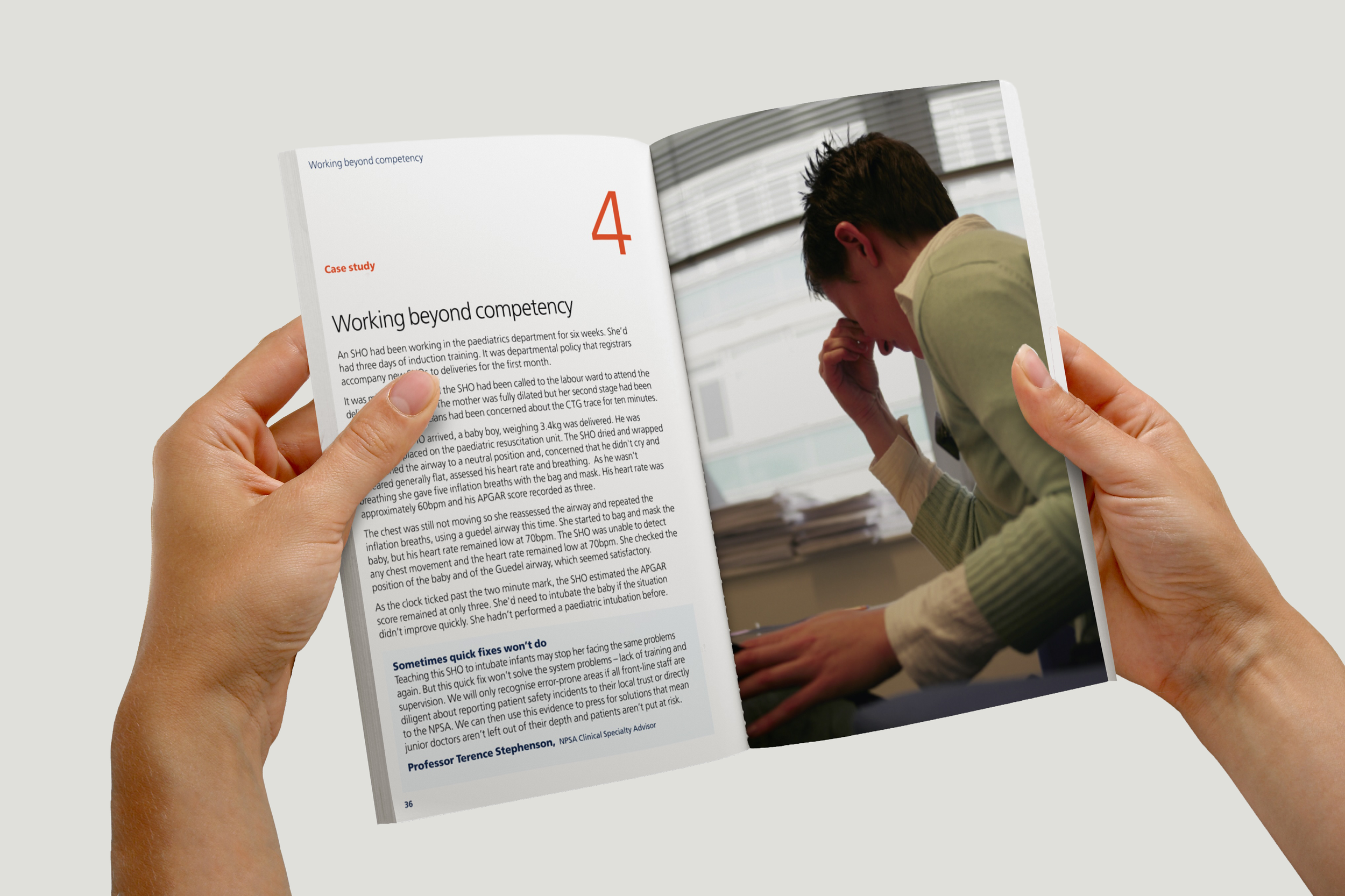
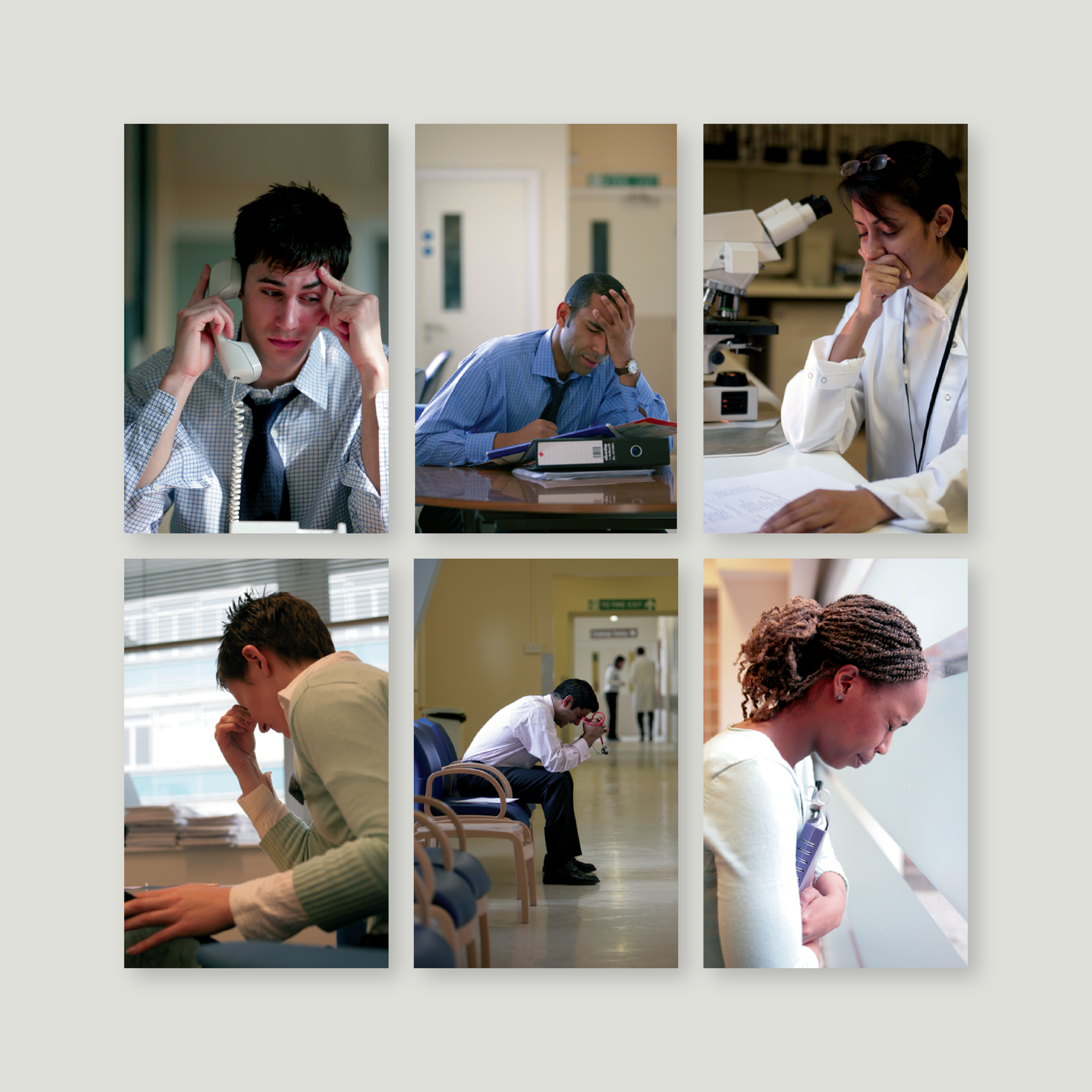
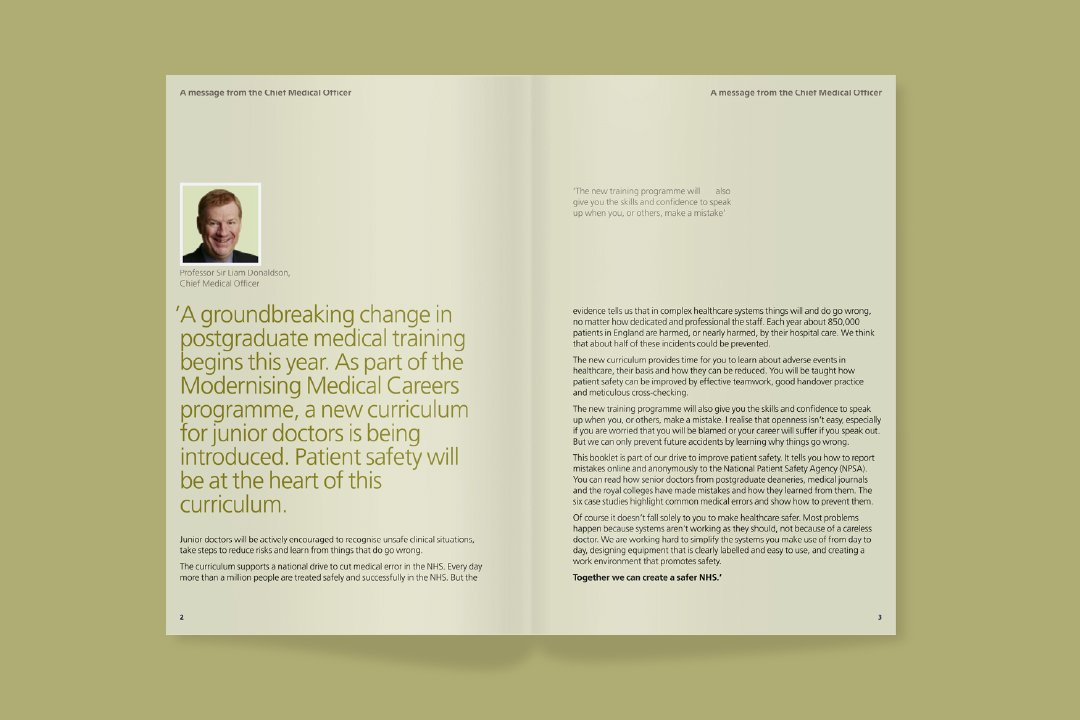
Following the success of the Clean Your Hands campaign, we were invited by Sue Randall of the National Patient Safety Agency to help with a new project: a publication called Medical Error. The aim? To encourage learning from mistakes by openly sharing case studies and stories from junior doctors working in real NHS settings.
‘The vast majority of NHS care is safe, but mistakes do happen, sometimes with tragic consequences. We can only prevent these problems if we learn from what goes wrong’
Initially, we presented three visual concepts to senior NHS stakeholders in Whitehall. One was a slick Swiss-style editorial layout that I was sure would win them over. But it didn’t. None of them did.
Most of us have experienced that moment when something goes wrong so completely you just freeze a sickening, head-in-hands instant where you’d give anything to be somewhere else.
So we proposed something entirely different: a booklet that captured the raw emotional reality of serious error. Honest. Stark. The opposite of slick.
They loved it.
We shaped the publication as a white coat pocket-sized brochure, deliberately understated and accessible. The content included personal reflections and case studies, with contributions from senior doctors who shared the moments that had left them stunned or shaken (though understandably sanitised). These insights gave the publication added weight and relatability.
Photographer Marcus Lyon was came on board and we shot a powerful series of images at Chelsea & Westminster Hospital, featuring real staff and models in real locations. The results were striking and gave the publication its distinctive emotional depth.
On the shoot, everyone knew exactly what we were talking about. What I’d assumed would be hard to capture turned out to be all too familiar.
The impact? Huge, and over 5 million copies were distributed, Medical Error won two CPR awards (including the Grand Prix), and generated powerful feedback:
83% said it encouraged learning from mistakes
88% believed case studies like these should be widely shared
73% said it helped promote openness in healthcare
A third of recipients kept their copy indefinitely
Sometimes, the most effective design isn’t Swiss; it’s brave, raw and authentic.