
Start-ups
Turning an idea into a credible business
Many businesses begin with a good idea.
Someone sees a gap in the market.
They have a skill, a product, or a new way of doing something.
The early energy is exciting.
Ideas come quickly. Possibilities feel endless.
But there is a difficult step between having an idea and building a real business.
At this stage most founders face the same questions:
Is the idea strong enough?
How do we stand out from competitors?
What should the brand look like?
What should the website say?
Where do we start?
These are not design problems.
They are business problems.
Build the foundations
The reality of starting a business
Most start-ups focus on the visible things first.
A logo.
A website.
Social media.
Those things feel productive. They are tangible.
But they rarely solve the deeper challenge:
Why should someone choose this business at all?
A strong start-up needs three things:
a clear idea
a believable offer
a credible presence
Without those foundations, marketing becomes difficult and growth becomes unpredictable.
10 common mistakes start-ups make
Starting a business is hard, and the same mistakes appear again and again.
Starting with a logo instead of a strategy
Trying to launch before the idea is clear
Assuming the product will sell itself
Copying competitors instead of differentiating
Overcomplicating the offer
Talking about features instead of value
Building a website before defining the message
Trying to look “big” instead of looking credible
Spending money on marketing before the foundations are right
Changing direction too often
None of these mistakes are unusual.
They simply happen when businesses move quickly without a clear structure.
What actually works
Successful start-ups usually follow a quieter, more disciplined path.
They focus first on understanding the market and the customer.
They define the offer carefully.
They build a clear story around the business and what makes it different.
Then they create a brand and website that communicates that clearly.
This doesn’t require huge budgets.
It requires clarity, focus and good decisions early on.
When those foundations are right, everything else becomes easier.
Marketing works better.
Clients understand the value faster.
Growth becomes more predictable.
How Lucid helps
Lucid Brand helps start-ups turn good ideas into credible businesses.
Our approach combines strategic thinking with practical implementation.
We help founders:
clarify their positioning
shape their offer
create a distinctive brand
build a clear website
define the first steps to attract clients
The goal is not simply to launch a business.
It is to build the foundations for a business that can grow.
Starting a business?
Most start-ups do not fail because the idea was bad.
They struggle because the foundations were never properly defined.
With the right structure in place, good ideas can turn into strong businesses surprisingly quickly.
If you’re at the beginning of that journey, we can help.
Example: Cultivated Hotels
Giving an ambitious concept a credible identity

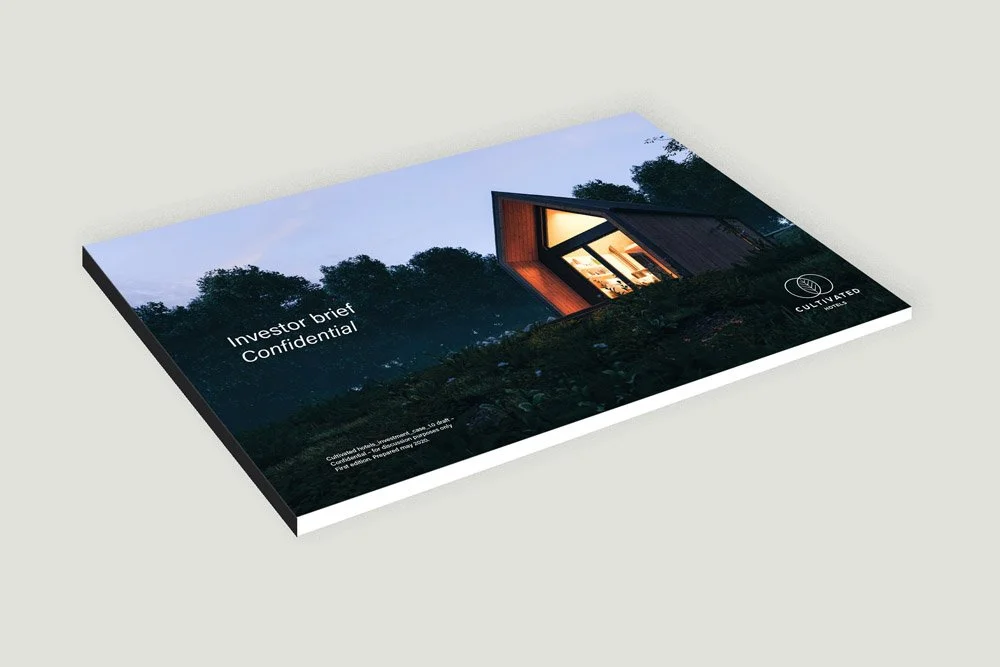
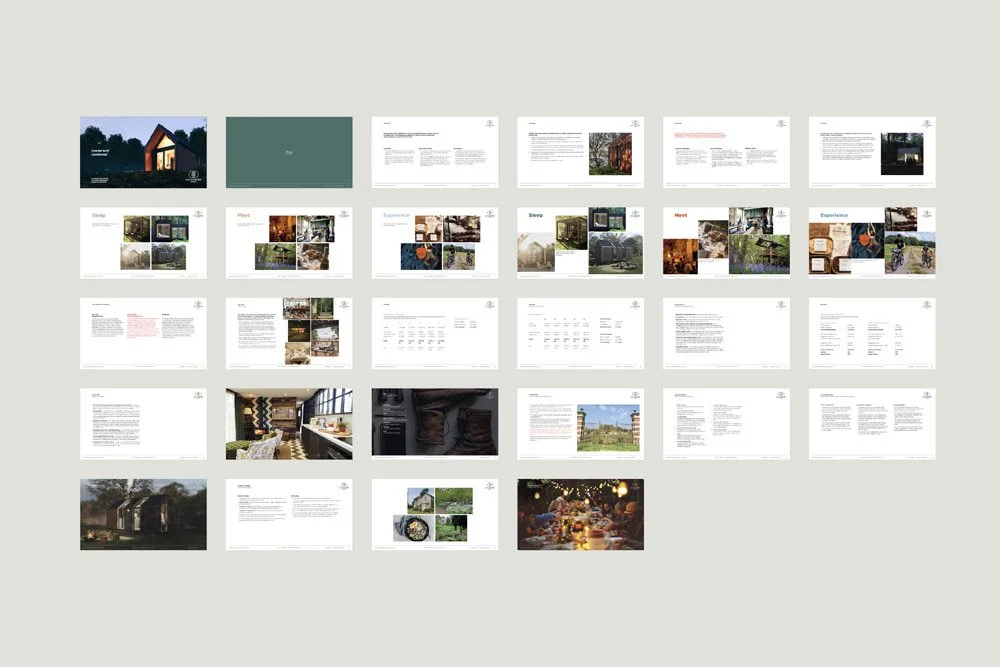
Hotel Makers approached us to help shape the brand for a new boutique hotel venture: Cultivated Hotels.
The concept was elegant and ambitious, but it had no identity and an investor pitch approaching.
We created a confident, minimal brandmark supported by clear guidelines and a polished pitch deck designed for City investors.
Although the venture was ultimately shelved, the work remains a strong example of how early-stage ideas benefit from clarity, restraint and well-crafted design.
A thoughtful concept became a credible proposition.